
SLEEP DENTISTRY / GENERAL ANESTHESIA
“Can’t I just be asleep for all of it?” Here, actually yes.
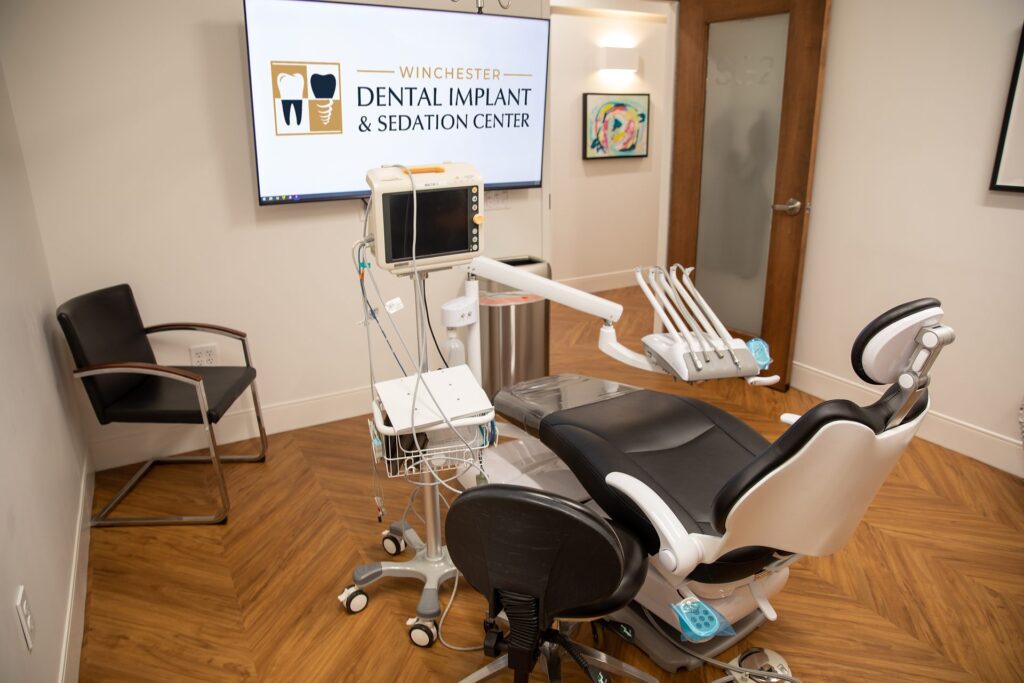
Let’s clear up the industry’s favorite fudge first: most offices advertising “sleep dentistry” mean a sedative pill or IV twilight — relaxed, foggy, but not asleep. If what you need is genuine unconsciousness — asleep when it starts, awake when it’s over, nothing in between — that requires general anesthesia administered by a licensed anesthesiologist. Very few dental offices in this region offer it. We built our center around it: a partnering licensed anesthesiologist administers and monitors your anesthesia right here while Dr. Oestervemb performs your surgery. Two specialists, one patient — one watching over you, one working for you.
Who genuinely needs to be asleep
Severe dental phobia — the kind where twilight sedation still sounds like torture, and decades of avoidance have proven it; overwhelming gag reflexes that make treatment physically impossible awake; patients for whom local anesthesia never seems to fully work; certain medical conditions, movement disorders, and special healthcare needs where stillness and unconsciousness are clinical requirements; and large full-arch surgical days that patients simply prefer to sleep through. If you’ve told yourself for years “I’d fix my teeth if they could just knock me out” — this page is the yes you were looking for.
What the day looks like
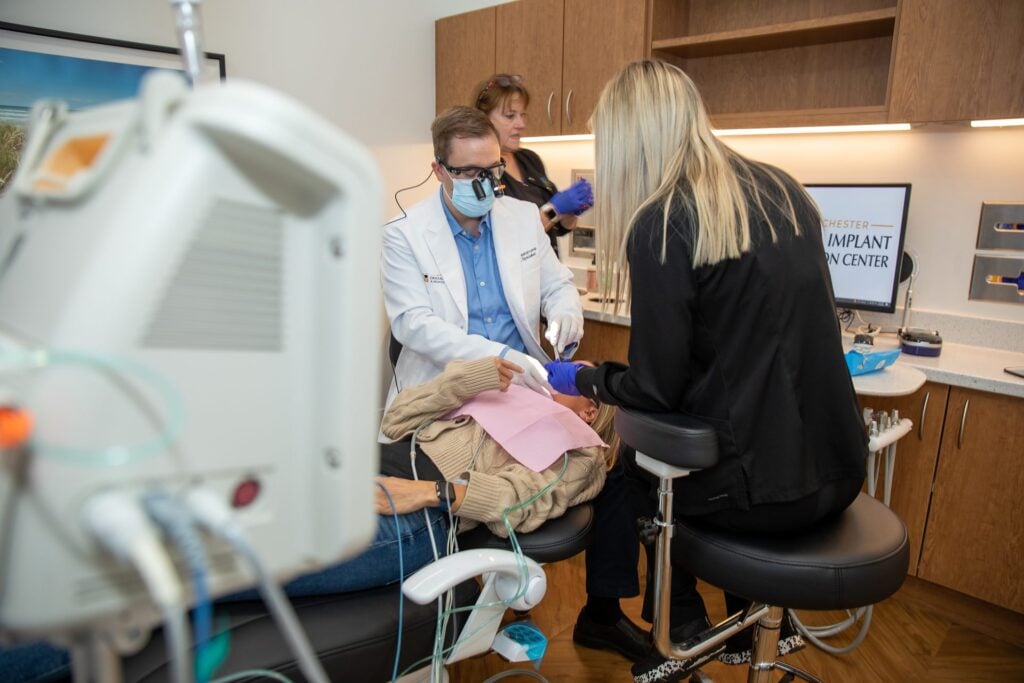
A pre-anesthesia review of your health history happens before the day is ever scheduled — the anesthesiologist clears you, not a checkbox. On the day: fasting per written instructions, a companion to drive you, and then the part patients describe with disbelief — counting backward, and waking up with the work done. You’re monitored continuously by a specialist whose entire job is you, recover under supervision until cleared, and head home for a sleepy afternoon. Full-arch patients frequently wake up with fixed temporary teeth already in place, which makes for a memorable mirror moment.
The honest price
General anesthesia here is $4,500, flat and published — covering the licensed anesthesiologist’s care throughout your procedure. It’s a real number for a real service most offices can’t offer at any price, and it appears in your written quote before you commit to anything. Lighter options — IV sedation ($195 per 15 minutes) and nitrous plumbed into every room — are covered in our sedation guide, and we’ll honestly tell you which level your case and your nerves actually call for. (One option you won’t find here: the sedative pill — we deliberately don’t offer oral sedation, because a swallowed pill can’t be adjusted and carries no IV line for reversal or emergency medication. The guide explains why IV does that job better.)
Why this exists here and almost nowhere else
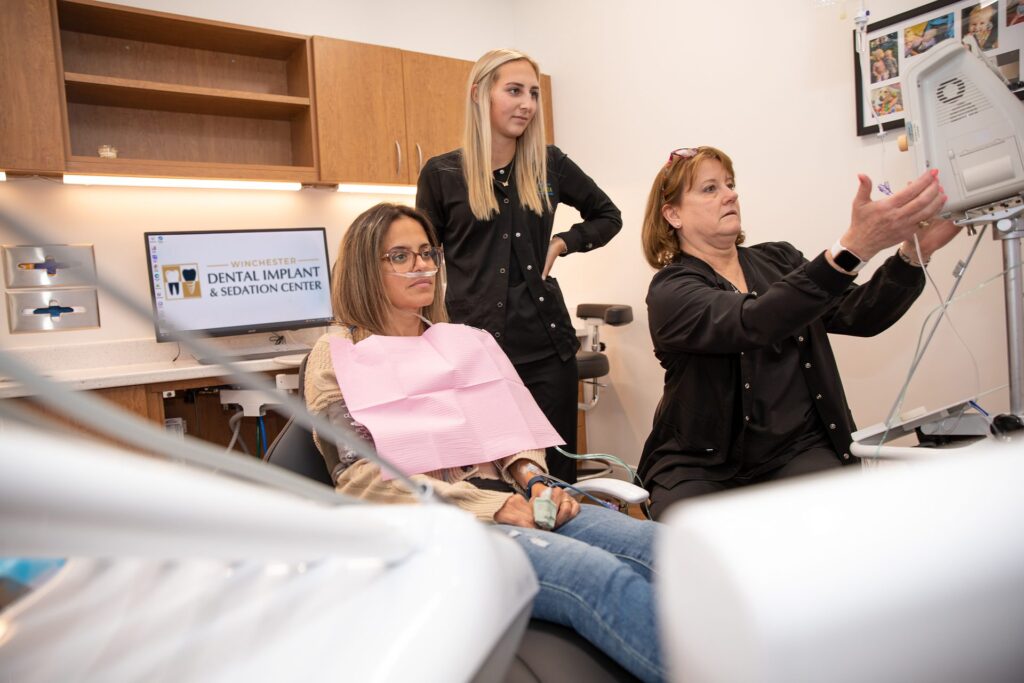
Offering true general anesthesia in a dental setting requires facility design, equipment, protocols, and an anesthesiology partnership most practices never take on. We took it on because the patients who need it most are precisely the ones years of fear has hurt worst — and because “Sedation” is literally half our name. It’s also why referring dentists send us their patients who couldn’t be treated anywhere else: the medically complex, the profoundly phobic, the ones every other office gave up on. Welcome; you’re our specialty.
What’s the difference between sleep dentistry and sedation dentistry?
Marketing, mostly. “Sedation” (nitrous, a sedative pill at some offices, or IV) relaxes you while you remain conscious; true “sleep dentistry” means general anesthesia — fully unconscious, administered by an anesthesiologist. Many offices advertise the first while implying the second. We offer both sedation and true sleep dentistry, and label them honestly.
Is general anesthesia safe in a dental office?
With a licensed anesthesiologist administering, pre-screening beforehand, and continuous monitoring throughout, office-based anesthesia has a strong safety record. Your medical history determines candidacy honestly — and a hospital setting is recommended instead when it’s the safer call.
Will insurance cover the anesthesia?
Occasionally partially — some medical plans contribute when anesthesia is medically necessary (certain conditions and special needs). We verify before treatment and give you the real answer in writing.
Can my whole treatment be done in one asleep visit?
Often, yes — consolidating work into one anesthesia session is a common reason patients choose it, and full-arch conversion days are built for exactly that.