FOR DENTURE WEARERS
Your dentures didn’t get worse. Your jawbone got smaller. We can fix the actual problem.
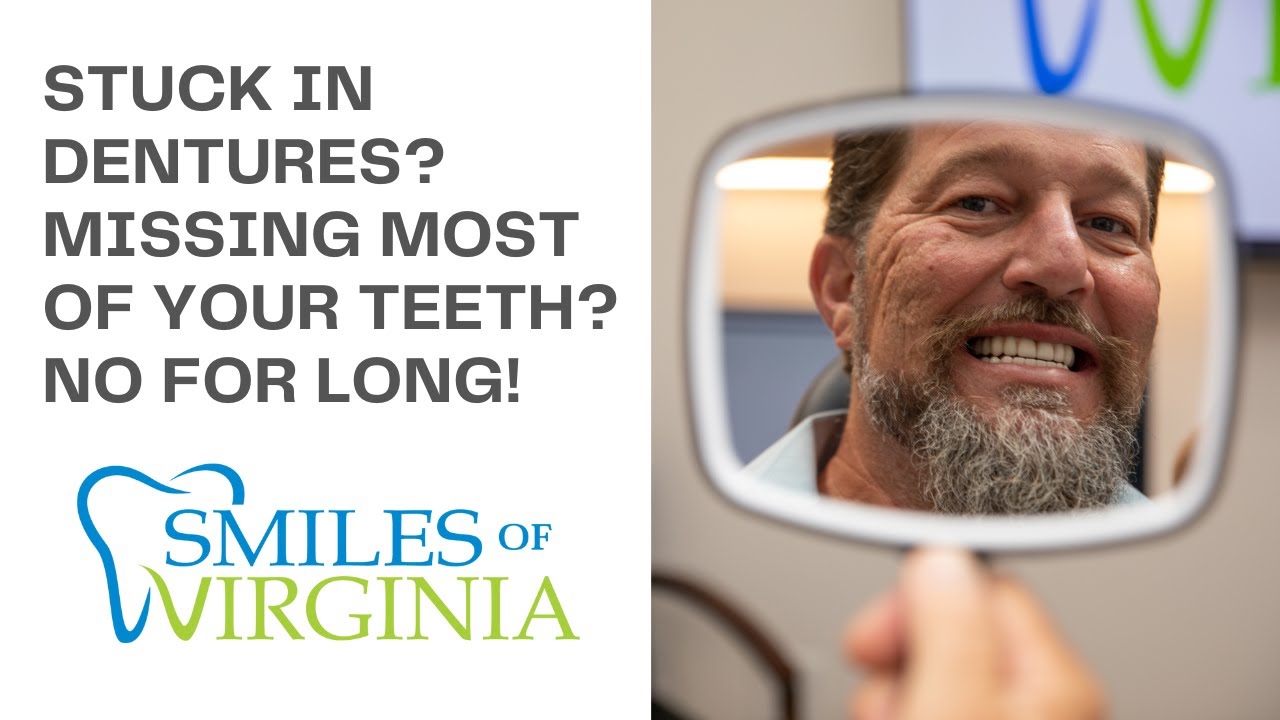
Here’s what nobody explained when you got dentures: without tooth roots, the jawbone that holds your denture shrinks a little every year — which is why a denture that fit fine in year one rocks and slips in year six, no matter how much adhesive you use. Relines chase a moving target. Implants stop the target from moving: they act like roots, the bone keeps its shape, and your teeth finally hold still. Dr. Oestervemb explains it in two minutes:
Two ways up — honestly compared
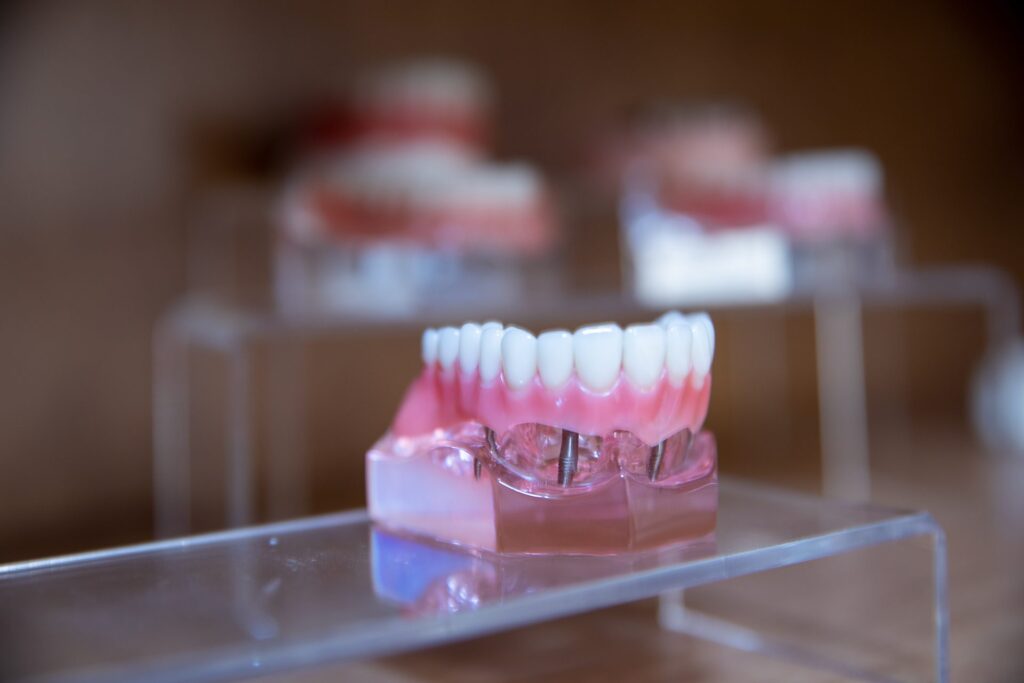
Snap-in (implant-retained overdenture). Two to four implants with connectors your denture clicks onto. It still comes out for cleaning — but it does not move while you eat, speak, or laugh. Often the most affordable entry into implant stability, and in many cases your existing denture can be adapted. Our range, implants and denture included: $15,000 – $20,000 per arch.
Fixed full-arch (All-on-4 / All-on-6). Four to six implants supporting teeth that never come out — brushed in your mouth, no adhesive, no nightstand glass, chewing power near natural teeth. The full experience of teeth again. Our range, complete with extractions, temporaries, and final arch: $20,000 – $32,000 per arch. Full details on our All-on-4 page.
| Your denture today | Snap-in | Fixed full-arch | |
|---|---|---|---|
| Moves when eating | Yes | No | No |
| Adhesive | Usually | No | No |
| Comes out at night | Yes | Yes (for cleaning) | Never |
| Stops bone loss | No — accelerates it | Yes, at implant sites | Yes |
| Palate coverage (upper) | Full palate — muted taste | Often reduced | None — roof of mouth free |
| Chewing power | ~20–25% | Strong | Near natural |
That palate row surprises people most: many upper-denture wearers haven’t fully tasted food in years. Removing the plastic from the roof of your mouth gives flavor back — patients mention it more than almost anything else.
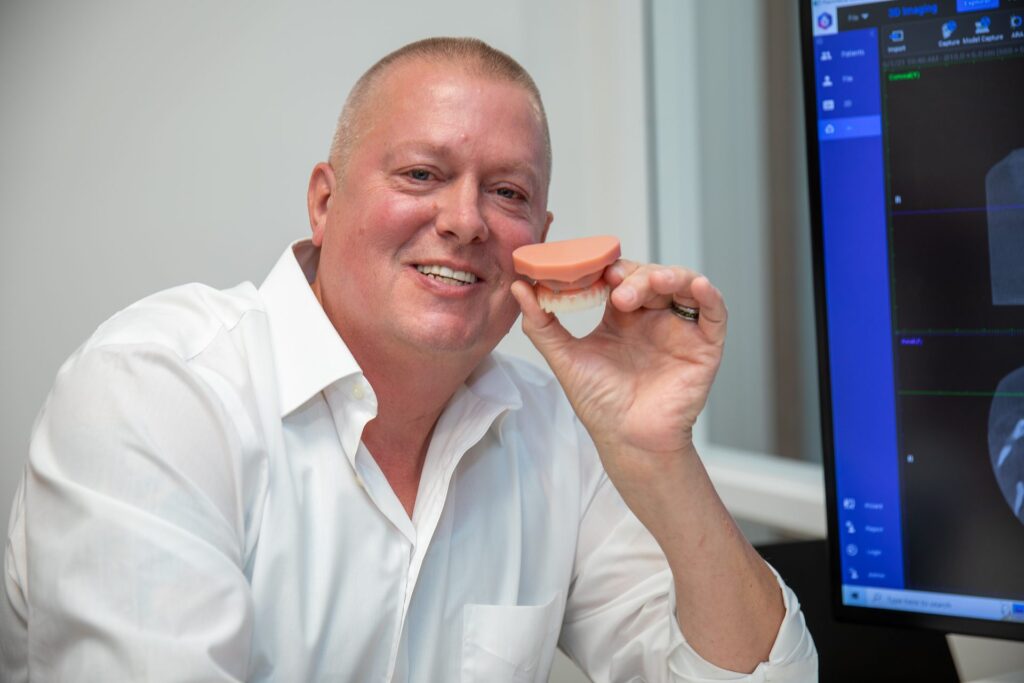
“Is it too late for me? I’ve worn dentures for 20 years.”
Almost never too late — but the honest version is: long-term denture wear does shrink bone, so the options narrow over time. Some long-time wearers are still straightforward snap-in candidates; others need grafting, or do best with full-arch techniques designed for low bone. The only way to know is a 3D CBCT scan — which is exactly why our consultation includes one, free. Dr. Oestervemb teaches grafting and implant techniques to other dentists as AAID MaxiCourse faculty; if there’s a path for your bone, he’ll find it — and if a particular option isn’t right for you, he’ll say that too.
What the investment looks like month to month
Most patients finance: through Cherry, CareCredit, Proceed, and LendingClub, snap-in stability often pencils out to a monthly payment in the low-to-mid hundreds, with exact figures in writing at your consult. Weigh it against the denture treadmill you’re already on — relines, remakes every 5–10 years, adhesive forever — detailed honestly on our cost page.
The visit that changes the math
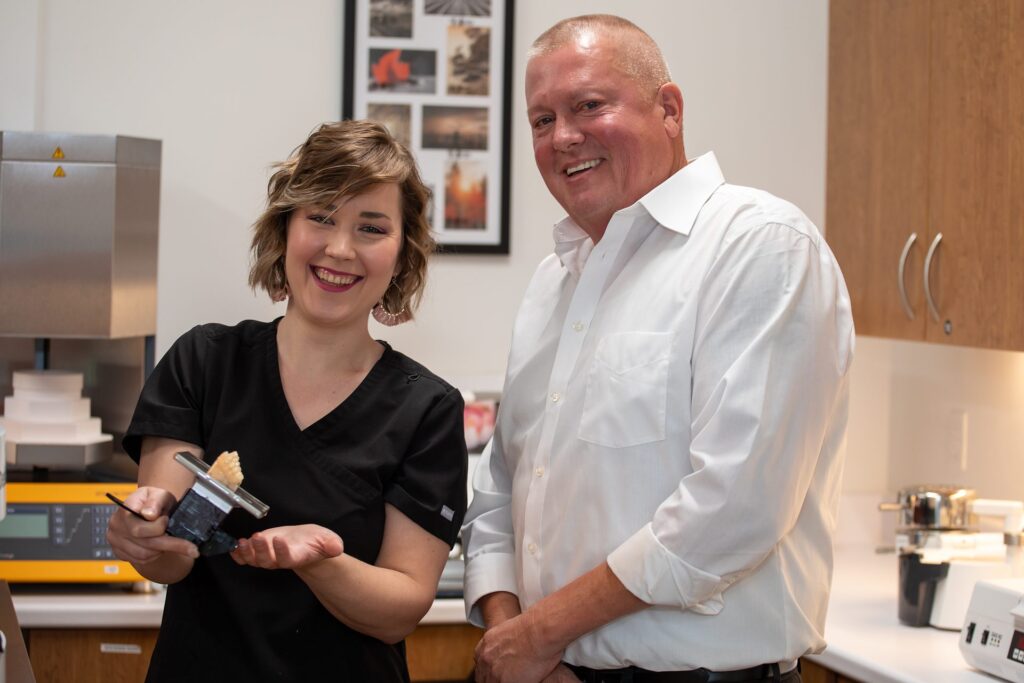
Bring your denture. In one free visit we’ll scan your jaw in 3D, show you — on screen, in your own anatomy — exactly which options your bone supports, and hand you complete written pricing for each. Sedation options make treatment far easier than the dentistry you remember, and one doctor handles everything from surgery to your final teeth, with the lab down the hall.
Can my current denture be converted to snap-in?
Sometimes — if it’s in good condition and fits the plan, connectors can often be added. Otherwise a new overdenture is made in our on-site lab. The scan and an exam of your denture tell us.
How many implants do I need to stabilize a denture?
Commonly two to four for a snap-in lower, four for an upper; fixed arches use four to six. Your bone — not a package price — decides.
Does it hurt to switch from dentures to implants?
With modern guided surgery and sedation options, most patients report the recovery is milder than the extractions they remember. Many are back to routine in days.
Will insurance help?
Often partially — components like extractions or the denture portion may be covered up to your annual max. We verify benefits first and can phase treatment across plan years.
Is snap-in a real solution or a consolation prize?
It’s real: stable eating, confident speech, no adhesive. Many patients start snap-in and upgrade to fixed later — the same implants can often serve both.
Will the implants under my denture lose bone?
A denture already taught you what bone loss does to a jaw. The implants that anchor your new one should not repeat the lesson. Dr. Oestervemb is a Zero Bone Loss Concepts Ambassador, trained by Prof. Tomas Linkevičius — the researcher who showed that bone loss around implants is preventable — and every implant here follows a published six-step standard: measured gum thickness, placement at the implant’s design depth, no cement under the gum, and bone-level X-rays you get to see. How we keep the bone around your implants where it started.