BONE GRAFTING & SINUS LIFTS
“Not enough bone” isn’t the end of the road. It’s a construction project — and this is the crew that teaches it.
Jawbone is use-it-or-lose-it: the moment a tooth goes, the bone that anchored it begins to shrink — up to a quarter of its width in the first year alone, more every year after. Wait long enough and an implant has nothing to grab. Grafting reverses that: we rebuild the site, your body replaces the graft with its own living bone, and the implant conversation reopens. Dr. Oestervemb doesn’t just perform advanced grafting — he teaches these techniques to practicing dentists as AAID Implant MaxiCourse faculty. If another office told you no, this is exactly the second opinion worth getting.
The main types, in plain English
Socket preservation ($500–$800). Done at the moment of extraction: graft material fills the empty socket so the bone never collapses in the first place. Cheap insurance for your future options — and why extracting and planning at the same office matters.
Ridge augmentation ($1,500–$4,500). For sites where bone has already narrowed or sunken, graft material rebuilds width and height over a few months of healing before (or sometimes alongside) implant placement.
Sinus lift ($1,500–$3,500). Upper back teeth sit just below your sinus; when bone there is thin, we gently raise the sinus floor and graft beneath it — a routine, well-proven procedure in experienced hands that turns “impossible” upper molars into standard implant sites.
PRF — your own biology, accelerating you. We draw a small vial of your blood and spin it into platelet-rich fibrin — a concentrated healing membrane placed at the surgical site. It’s your own growth factors, speeding healing and improving graft integration. Standard practice here, not an upsell.
What it’s actually like (the honest version)
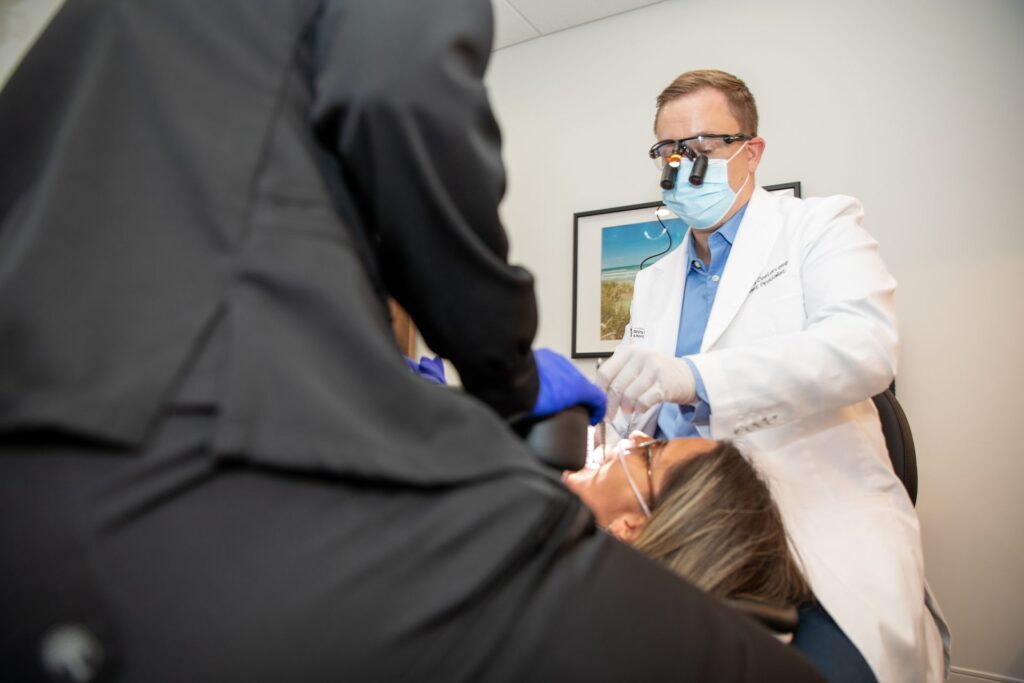
Most grafting is done under local anesthesia — with sedation available and popular for larger cases — and most patients describe recovery as a few days of manageable soreness and swelling, handled with over-the-counter relief and soft foods. The harder part is patience: grafts mature over roughly 3–6 months depending on type and site. We’ll map your personal timeline on your scan, in months and dates, before you commit to anything.
Priced before treatment, never during
Every figure above lands in your written quote before treatment — grafting is never a mid-treatment surprise here, because the 3D scan shows us your bone before anything starts. Sometimes the scan brings good news instead: All-on-4‘s angled-implant design was invented precisely to avoid grafting in many full-arch cases, and if that’s your situation, we’ll happily tell you the cheaper truth.
Told “no” somewhere else?
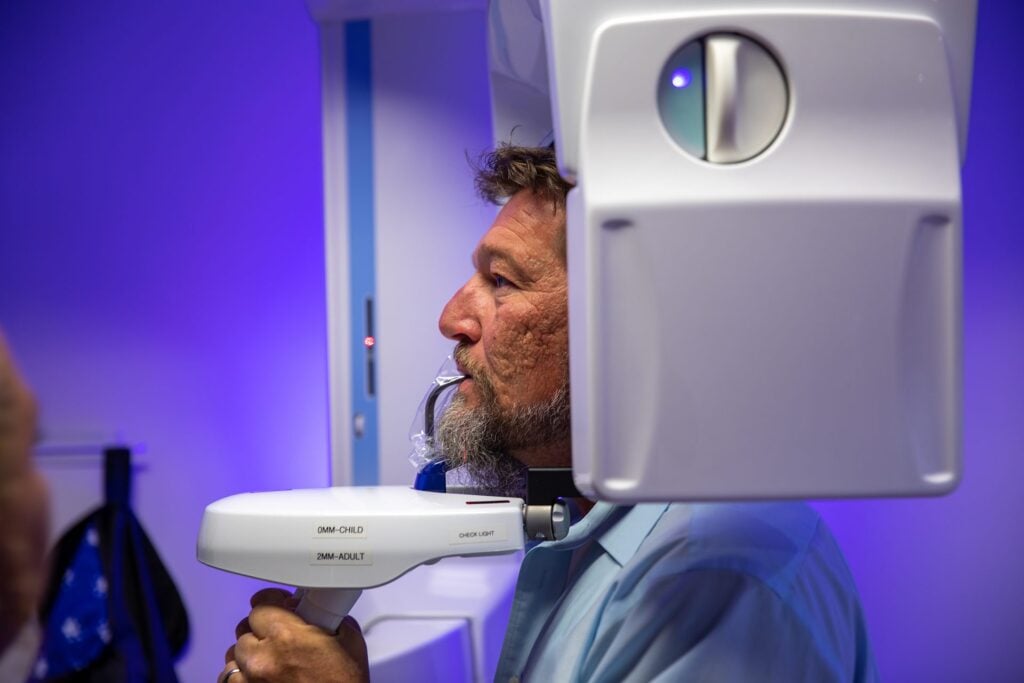
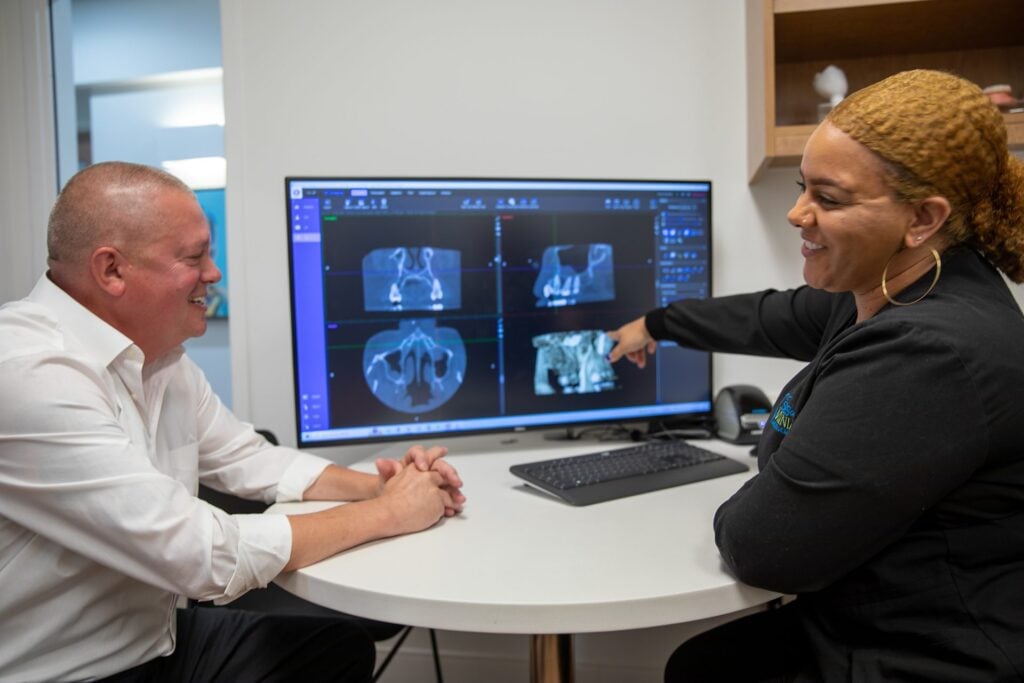
Bring that scan — or take a fresh one free — and get a double board-certified second read. Between socket-timing strategy, modern grafting, PRF, and graft-avoiding full-arch designs, a large share of “not a candidate” patients turn out to have a path. And when someone genuinely doesn’t, we say that too, with the reasons on screen.
Does bone grafting hurt?
Most patients report a few days of soreness similar to a tooth extraction, managed with over-the-counter pain relief. Sedation is available for larger procedures.
Where does graft material come from?
Options include processed donor bone, synthetic materials, or your own bone, chosen per case — all extensively studied and used in millions of procedures. We’ll explain exactly what we recommend for you and why.
How long until I can get my implant?
Socket preservation often allows placement in about 3–4 months; larger grafts and sinus lifts typically 4–6 months. Some cases allow graft and implant in one visit. Your scan sets the schedule.
Can I skip grafting with All-on-4?
Often, yes — its angled implants use bone you already have. That’s one of the first things we check on a full-arch scan.
Rebuilt bone should stay rebuilt
Grafting puts bone back. What keeps it there is everything that happens next — the thickness of the gum over it, the depth and design of the implant, and whether cement ever ends up under the gum. Dr. Oestervemb is a Zero Bone Loss Concepts Ambassador, trained by Prof. Tomas Linkevičius, the researcher who showed that bone loss around implants is preventable, and every implant here follows a published six-step standard with bone-level X-rays you get to see. How we keep the bone around your implants — grafted or not — where it belongs.