ONE MISSING TOOTH
Replace one tooth — without sacrificing the two beside it.
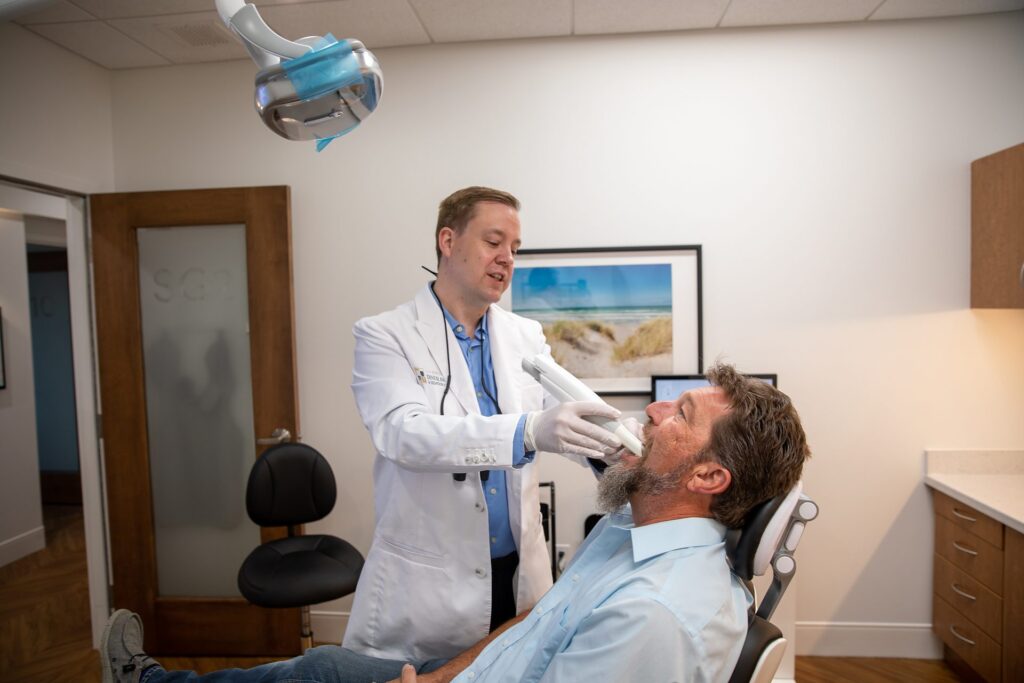
A single missing tooth presents a quiet fork in the road. One path (a bridge) solves it by grinding down the two healthy teeth next door to hold a three-tooth unit. The other (an implant) replaces just what’s missing — a titanium root and a crown that stands on its own, leaving your healthy teeth exactly as nature built them. Dr. Oestervemb places and restores your implant himself — fully guided, planned in 3D — with the crown made in our on-site lab.
Implant vs. bridge vs. waiting — the honest comparison
| Dental implant | Bridge | Do nothing | |
|---|---|---|---|
| Neighboring teeth | Untouched | Ground down permanently | Slowly tilt into the gap |
| Jawbone at the site | Preserved | Keeps shrinking under the gap | Shrinks — future fix gets costlier |
| Lifespan | Designed for decades (~95% long-term success) | Typically 10–15 years, then redo | Problem compounds |
| Cleaning | Brush and floss like a tooth | Special threaders under the bridge | — |
| Upfront cost | $3,500–$5,500 complete | $1,500–$2,500/unit (×3 units) | $0 today, most expensive later |
A bridge is sometimes genuinely the right call — and when it is for you, we’ll say so. But run the 15-year math: one implant, done once, usually beats a bridge you’ll buy twice — and “do nothing” is the only option with a guaranteed bad outcome, because the bone starts shrinking the month the tooth comes out. Replacing a whole row of teeth instead? See our implant bridge page.
“Will I have a gap while it heals?” (No.)
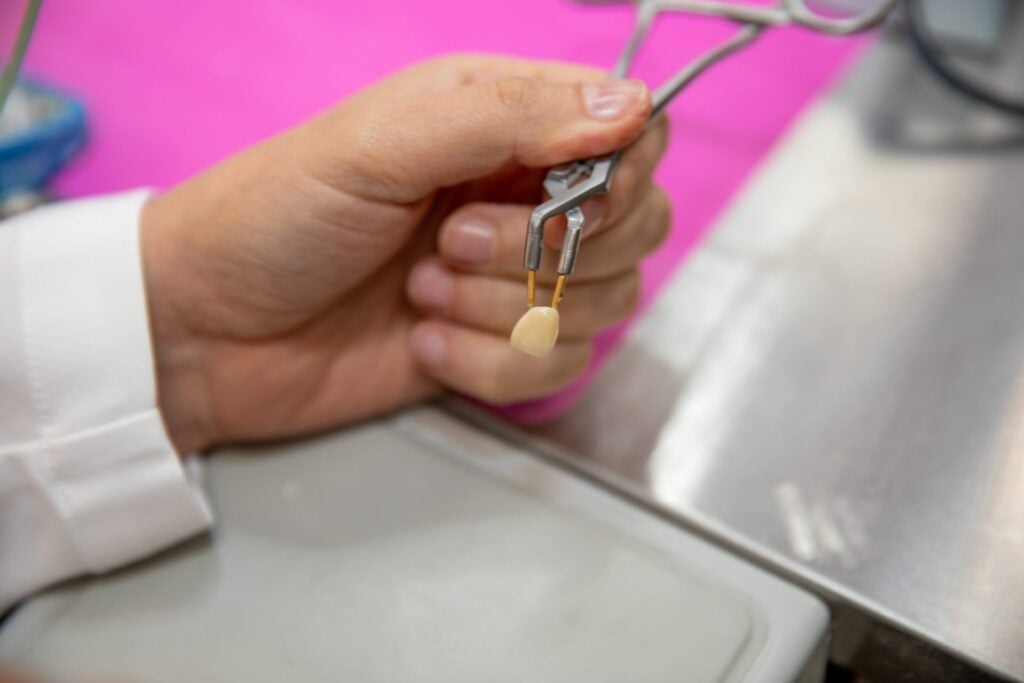
The fear that stops most front-tooth patients: months of a visible hole. Here’s the reality at our center — for front teeth, you leave with a natural-looking temporary the same day in nearly all cases, whether that’s a temporary crown on the implant itself (when bone allows immediate placement) or a discreet interim solution while the implant integrates. Nobody at work will know. And because our lab is in-house with two full-time technicians, your final crown is custom-shaded against your neighboring teeth in person — not matched from a photo by a lab three states away.
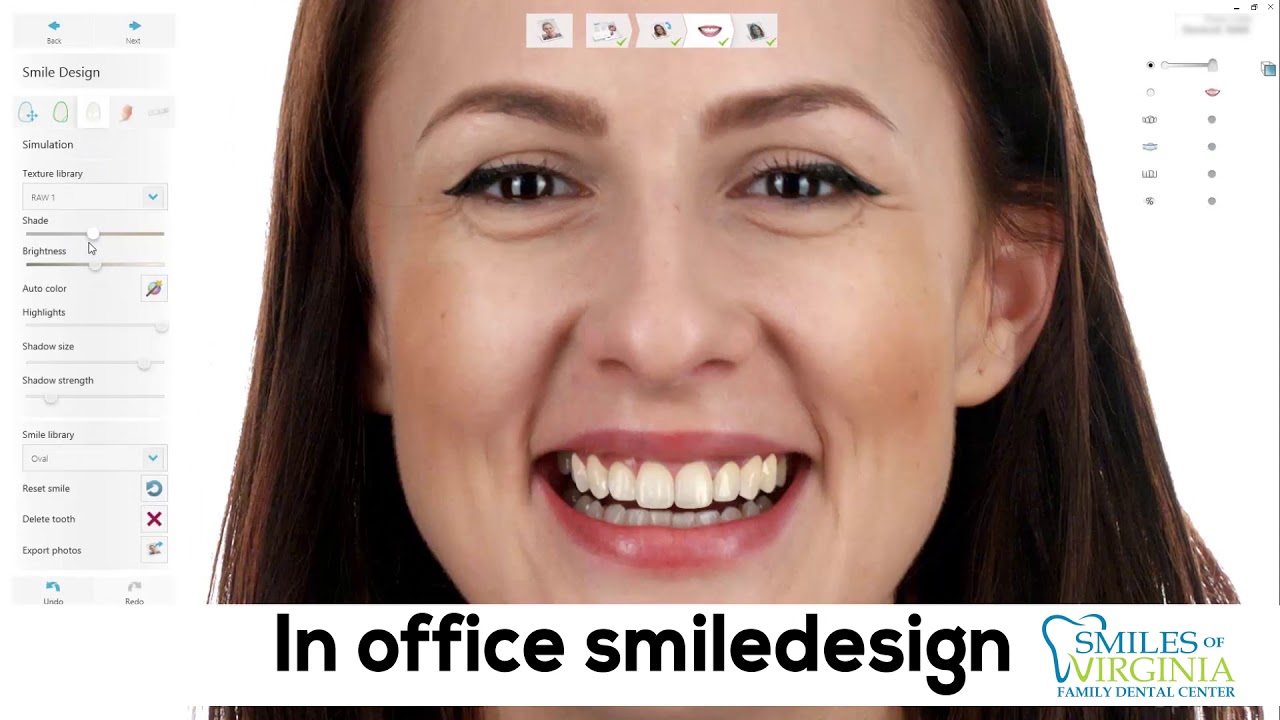
Designing a tooth nobody can spot
A front tooth is as much design as surgery — shape, translucency, the way light passes through the edge. Here’s how smile design works in our practice, for implants and natural teeth alike:
What the process looks like
Visit 1 — free consult + 3D scan. We confirm the site’s bone, discuss timing (a failing tooth can often be extracted and the implant placed the same day), and hand you complete written pricing.
Placement. A precise, fully guided procedure — most patients are surprised how uneventful it is; local anesthesia is plenty for many, sedation available for the rest. Typical soreness: a day or two of ibuprofen.
Integration. Over the following weeks the implant fuses with your bone while you live normally.
The crown. Our lab crafts it, Dr. Oestervemb fits and fine-tunes it, and the tooth simply rejoins the lineup — brushed, flossed, and forgotten.
What it costs
A complete single implant — post, abutment, and lab-crafted crown — runs $3,500–$5,500 here, with financing through Cherry, CareCredit, Proceed, and LendingClub that typically lands near a phone-bill-sized monthly payment. The full breakdown, including what insurance tends to cover and the five questions to ask any provider, is on our cost page. If a tooth was extracted years ago and the site needs grafting, we’ll show you that on the scan and price it before anything starts — no mid-treatment surprises.
How long does a single implant take, start to finish?
Commonly 3–5 months from placement to final crown, driven by bone healing. Many cases qualify for same-day placement at extraction, which shortens the journey.
Does getting an implant hurt?
The procedure itself is done under local anesthesia (sedation optional) — most patients compare the recovery to a tooth extraction or easier, managed with over-the-counter pain relief for a day or two.
Am I a candidate if my tooth has been gone for years?
Often yes — sometimes with a grafting step first to rebuild bone. The 3D scan gives a definitive answer, free.
Implant or bridge — which is right for me?
If the neighboring teeth are healthy, an implant usually wins the long game; if those neighbors already need crowns, a bridge can make sense. You’ll get a straight recommendation either way.
Will the implant crown match my other teeth?
Yes — it’s custom-shaded in our on-site lab, checked against your natural teeth in person before it’s finished.
Will the bone around my implant stay?
That question decides whether a single implant is still solid in twenty years, and most offices never raise it. Dr. Oestervemb is a Zero Bone Loss Concepts Ambassador, trained by Prof. Tomas Linkevičius — the researcher who showed that bone loss around implants is preventable — and every implant here follows a published six-step standard: measured gum thickness, placement at the implant’s design depth, a screw-retained zirconia crown with no cement under the gum, and bone-level X-rays you get to see. Read the Zero Bone Loss Standard we follow on every implant.