TECHNOLOGY & THE LAB
The most important room in this building isn’t an operatory. It’s the lab forty feet from your chair.
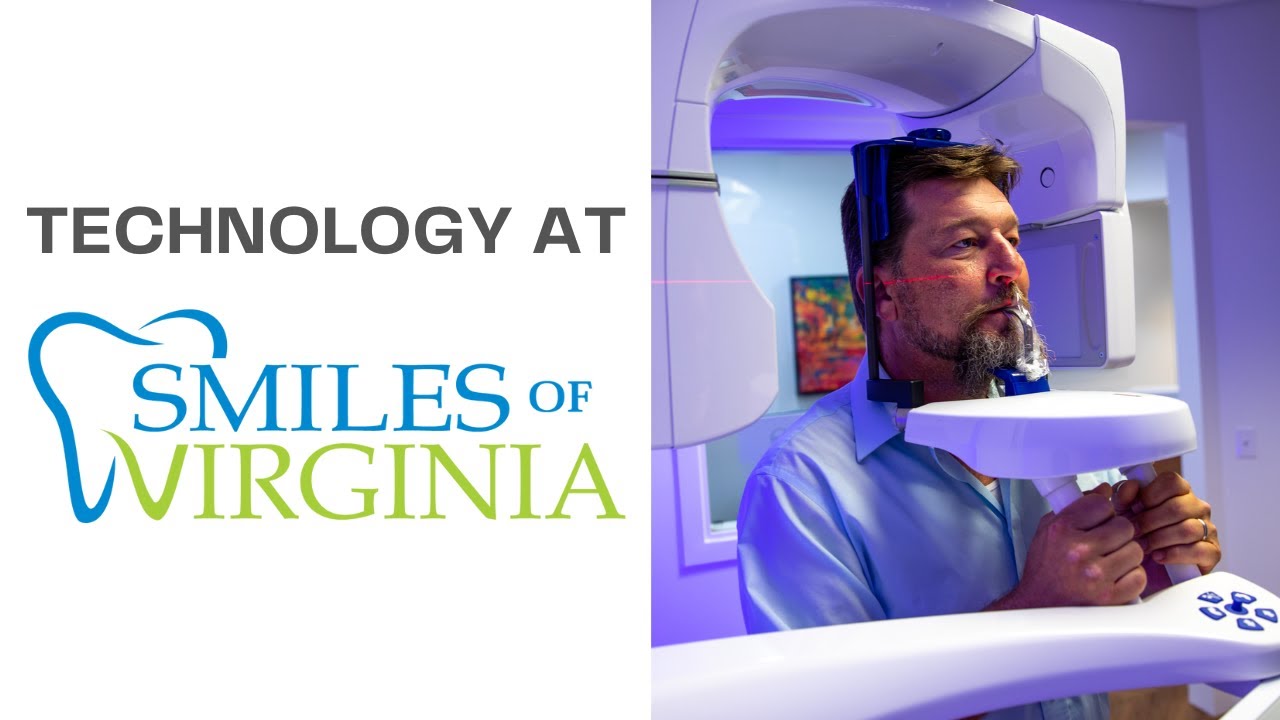
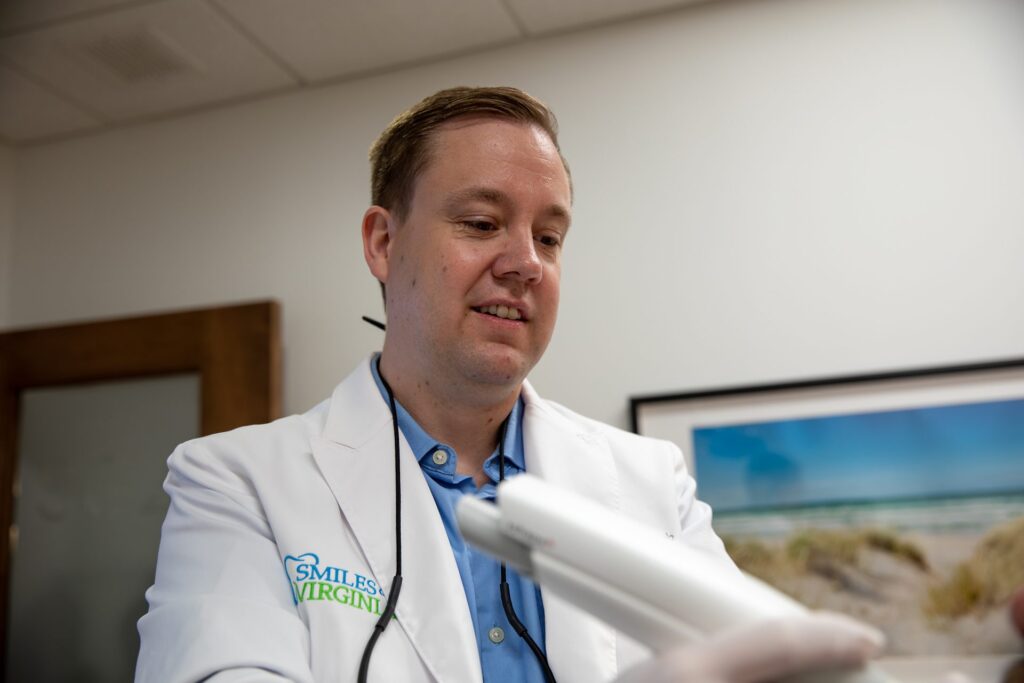
Implant dentistry rewards precision and punishes guesswork. Every technology here exists to remove a guess: about your anatomy, about implant position, about how your final teeth will look and bite. And because the lab that builds your teeth is in this building — staffed by two full-time technicians, not three states away — every adjustment happens in hours, not shipping cycles. Here’s Dr. Oestervemb walking through the technology himself:
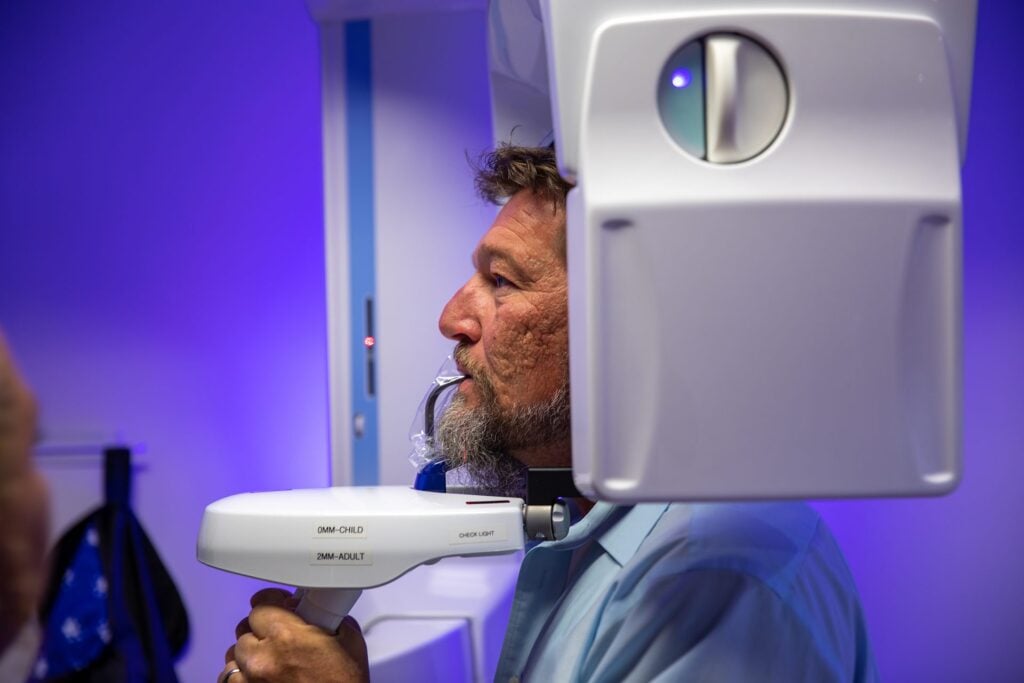
3D CBCT imaging — the map before the journey
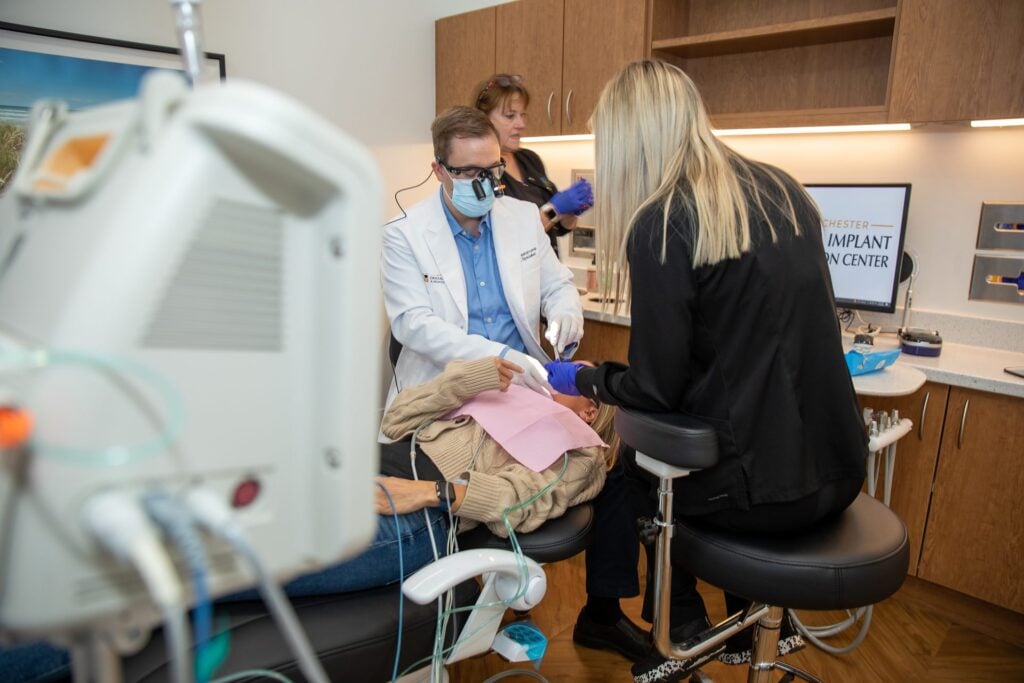
A cone-beam CT captures your jaw in three dimensions: bone height, width and density, nerve positions, sinus anatomy — everything a two-dimensional X-ray flattens and hides. What it means for you: your quote is based on your actual anatomy (it’s why we can be honest about price), and surprises get found on a screen instead of in surgery. It’s included free in your implant consult.
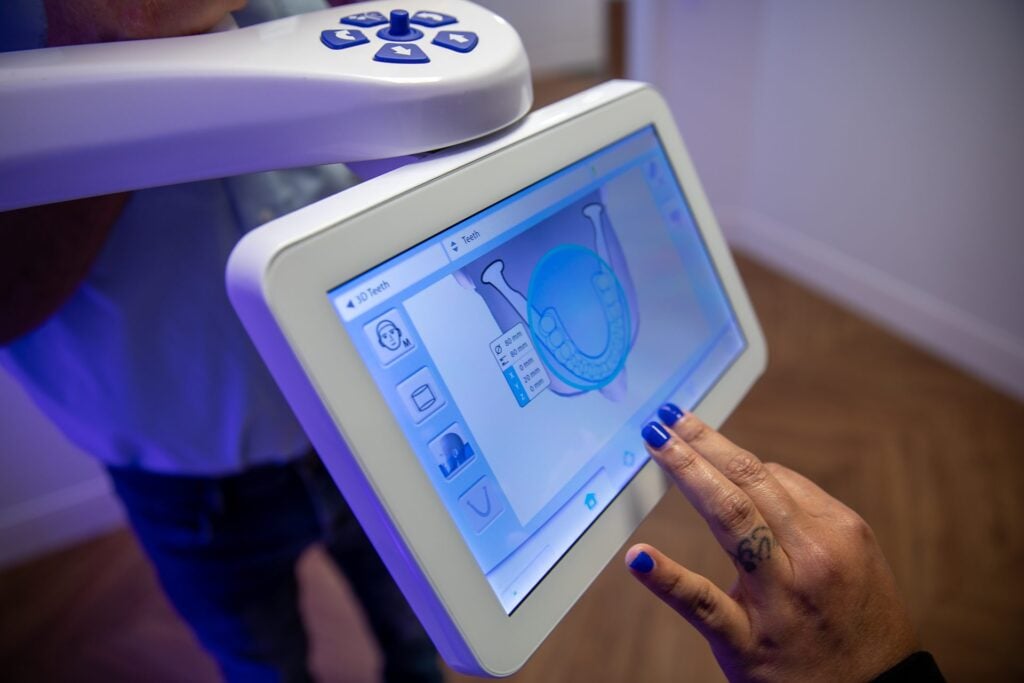
Fully guided surgery — every implant, planned before you sit down
From your scan, Dr. Oestervemb positions each implant digitally — angle, depth, distance from nerves — then a custom surgical guide, printed here, transfers that plan to your mouth with sub-millimeter accuracy. Implants at this center are routinely placed fully guided; freehand guessing isn’t part of the workflow. How the digital plan is built, step by step. What it means for you: shorter surgeries, smaller incisions or none at all, milder recoveries, and implants placed where bone is strongest — the foundation of same-day teeth and decades-long results.
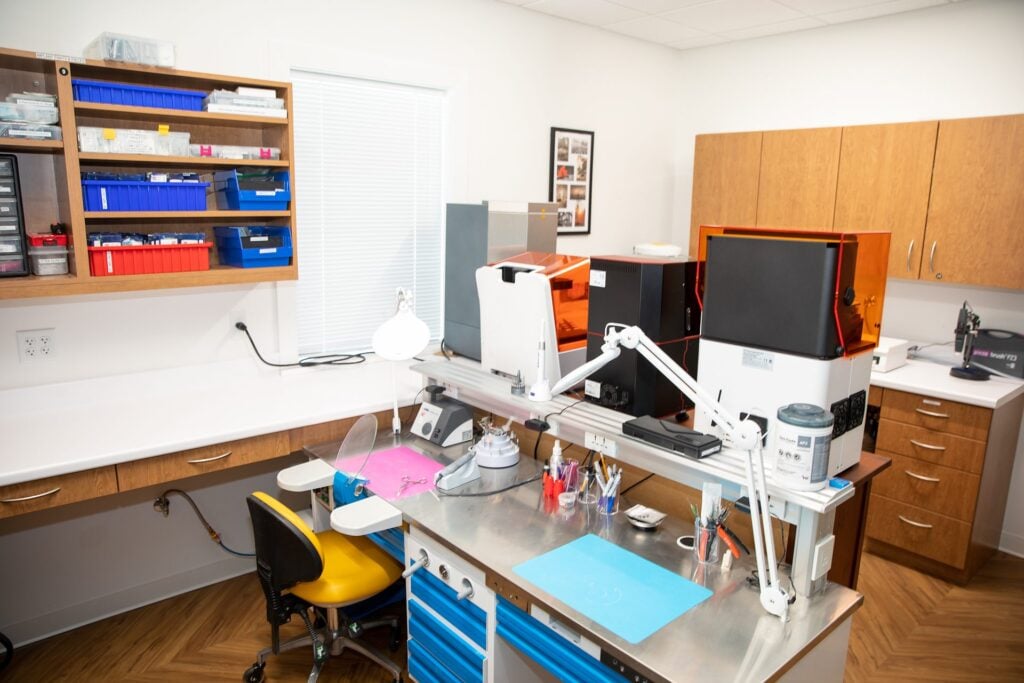
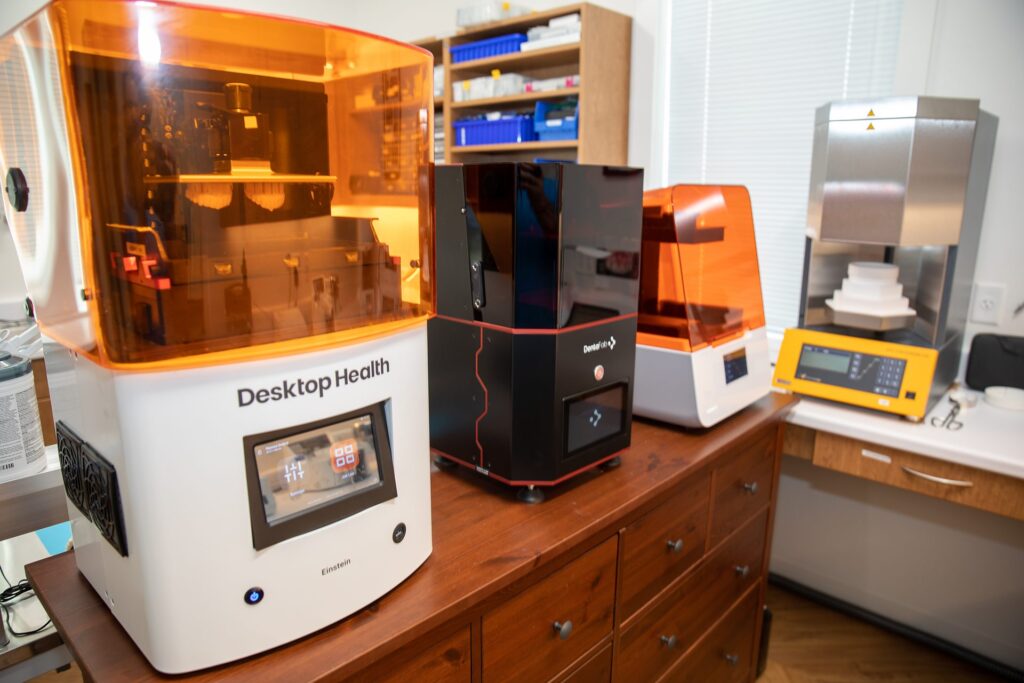
The in-house lab & 3D printing — your teeth never leave the building
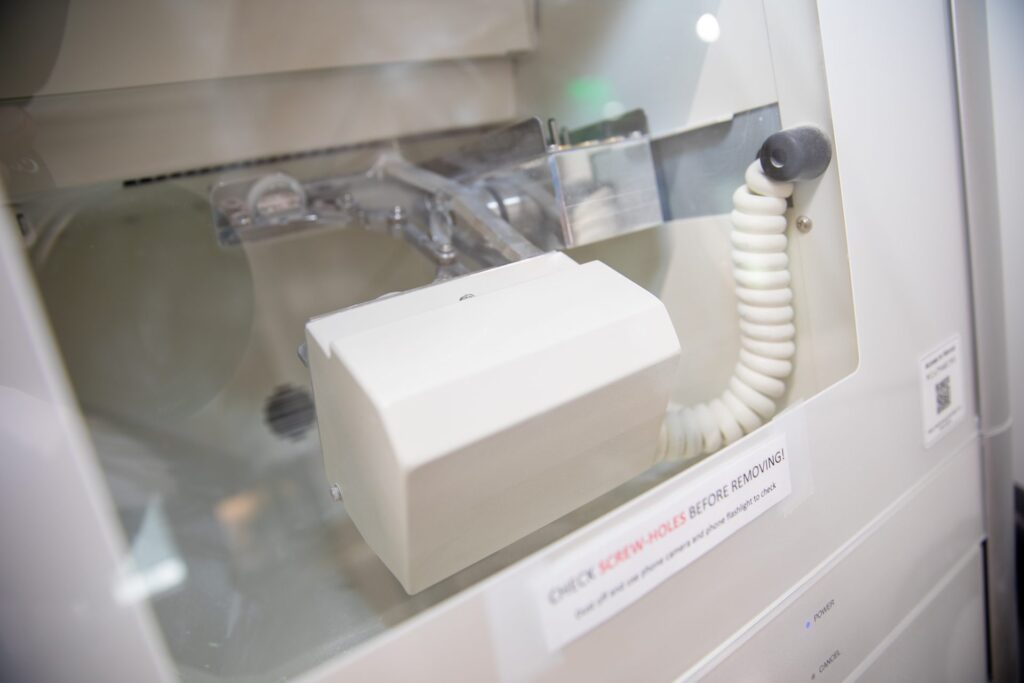
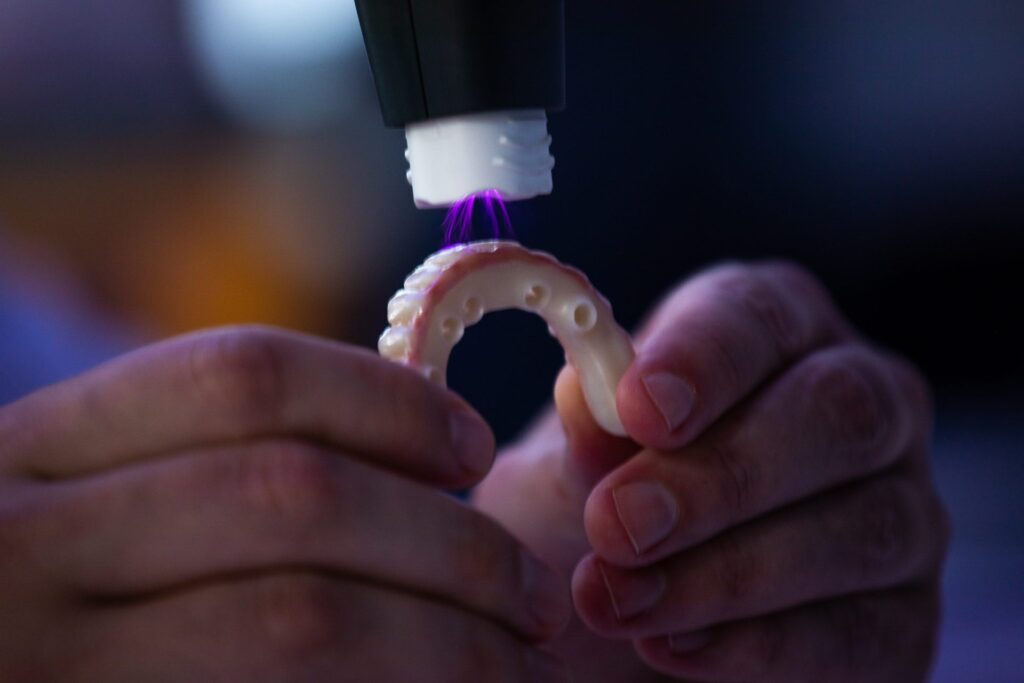
Surgical guides, temporary teeth, models, and final arches are designed and produced on site by our two full-time lab technicians. What it means for you: same-day teeth are logistically possible, shade-matching happens against your real teeth in person, a chipped temporary is fixed in hours, and two outside markups vanish from your bill. This room is the “one roof” in one doctor, one roof, one bill.
Digital impressions — the goo is gone
An intraoral scanner replaces the gag-inducing impression trays with a small camera wand. What it means for you: minutes instead of gagging, and a digital model more precise than putty ever was — which your crowns and arches inherit.
PRF — your own blood, recruited for healing
A small draw of your blood, spun in-office, becomes platelet-rich fibrin: a concentrated membrane of your own growth factors placed at surgical sites. What it means for you: faster, calmer healing and better graft integration — biology assisting surgery, from the safest donor there is: you.
Gentle instrumentation & comfort tech
Piezoelectric surgical instruments cut bone with ultrasonic precision while sparing soft tissue, and comfort protocols — from profound numbing technique to IV sedation to full general anesthesia with a licensed anesthesiologist — wrap around all of it. What it means for you: the gap between what you feared and what you experienced is our favorite review topic.
Technology is the tool. Judgment is the product.
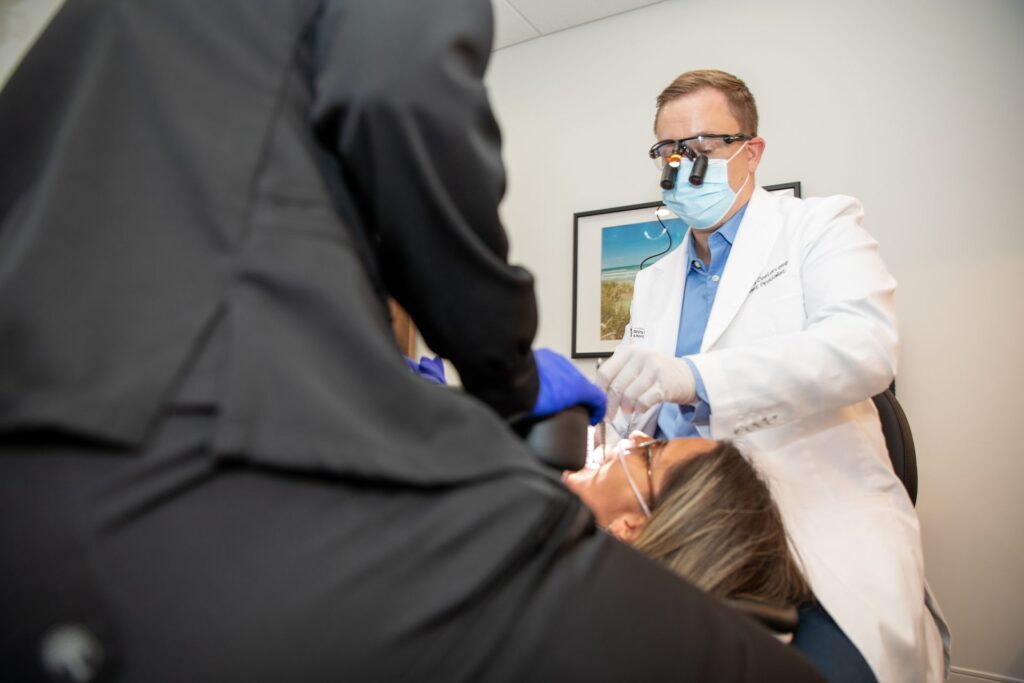
Machines don’t place implants; the doctor holding the plan does. Every tool above is in the hands of Winchester’s only double board-certified dentist — who also teaches these techniques to other dentists as AAID MaxiCourse faculty. The scanner finds the truth, the guide executes the plan, the lab perfects the teeth, and one accountable doctor signs all of it.
Is a CBCT scan safe?
It uses a low radiation dose — a fraction of a medical CT — and only when diagnostically justified. For implant planning, it’s the standard of care; placing implants without 3D imaging is the bigger risk.
Does guided surgery cost extra?
No — planning and guides are part of how implants are done here, built into our published pricing.
Why does an in-house lab matter to me?
Speed (same-day teeth, same-day fixes), accuracy (shade-matched in person), and cost (no outside-lab markup). It’s the difference you taste every time a bite adjustment takes an hour instead of two weeks.
Where the lab meets the bone
The shape of an implant tooth where it emerges from the gum — the emergence profile — affects whether the bone beneath it stays stable, and so does whether the tooth is cemented or screwed in. That is why every implant restoration here is designed in this building, screw-retained in zirconia, and polished where it meets the gum, with no cement ever left beneath it. It is part of the Zero Bone Loss Concepts protocol Dr. Oestervemb follows as an Ambassador trained by Prof. Tomas Linkevičius. Read the full Zero Bone Loss Standard.