
GLP-1 MEDICATIONS & SEDATION
On Ozempic, Wegovy or Mounjaro? Tell your dentist before sedation — here’s why.
Yes — always tell your dentist, and tell them when your sedation visit is being planned, not the morning of. GLP-1 medications such as Ozempic, Wegovy, Mounjaro and Zepbound slow down how quickly your stomach empties. That’s part of how they curb appetite — but it also means food can still be sitting in your stomach long after your last meal, even if you followed the usual fasting rules. IV sedation and general anesthesia blunt the reflexes that normally protect your airway, and a stomach that isn’t empty raises the risk of its contents being inhaled into the lungs (aspiration). It’s a manageable risk. It’s only manageable if your sedation team knows.
Which medications this applies to
The GLP-1 family (some also act on a second gut hormone, GIP) includes:
- Semaglutide — Ozempic, Wegovy, and Rybelsus (a daily pill)
- Tirzepatide — Mounjaro, Zepbound
- Liraglutide — Victoza, Saxenda
- Dulaglutide — Trulicity
Compounded semaglutide or tirzepatide from a med spa or telehealth service counts too, and so does a low “microdose.” Weekly injection, daily shot or daily pill — if it’s in this family, we need to know.
What current anesthesia guidance says
If you’ve heard conflicting advice, that’s because the advice changed. In 2023, the American Society of Anesthesiologists suggested pausing these drugs before elective procedures. In October 2024, the ASA and four other medical societies replaced that with more nuanced guidance, which remains the current standard:
- Most people can keep taking their GLP-1 as usual. Stopping isn’t automatically safer — for people who take it for diabetes, missed doses can push blood sugar up.
- Risk is higher in certain situations: the first weeks after starting or increasing a dose (typically four to eight weeks), higher doses, and active stomach symptoms such as nausea, vomiting, stomach pain or constipation.
- Higher-risk patients may be asked to follow a liquid-only diet for the 24 hours before their procedure.
- Elective procedures should wait until active stomach symptoms settle.
- It’s a shared decision between your sedation provider, the clinician who prescribes your medication, and you.
The ASA’s patient guide to diabetes and weight-loss drugs before surgery is a good plain-English summary. This page reflects guidance current as of October 2026.
How we handle it at Winchester Dental Implant & Sedation Center
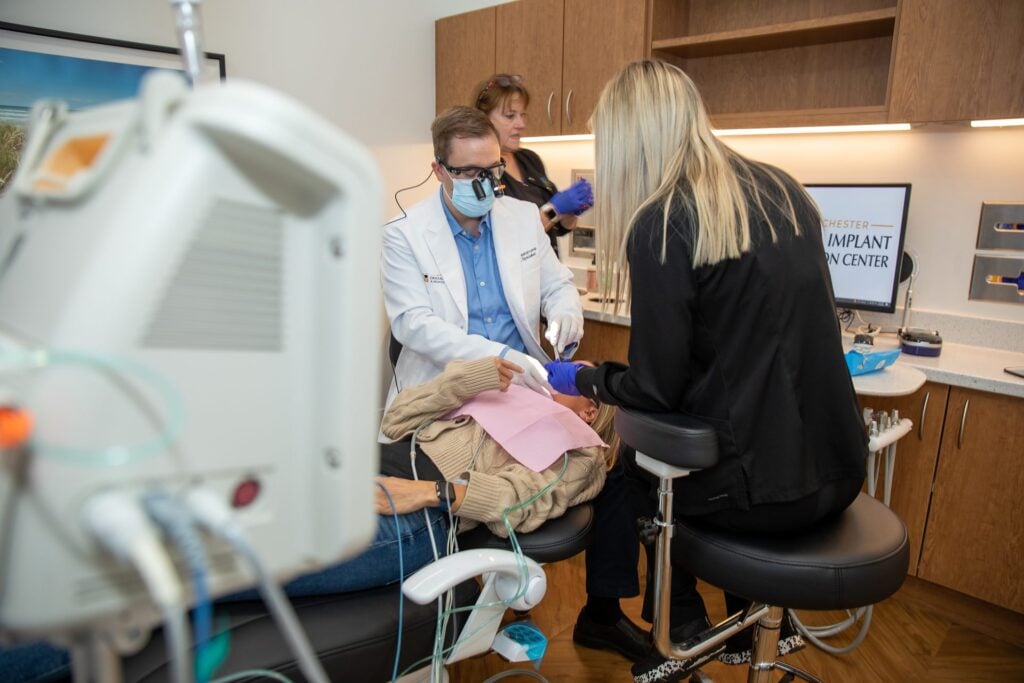
Sedation here is provided by Dr. Oestervemb, IV sedation certified since 2010, or — for patients who need to be fully asleep — by a licensed anesthesiologist, right here in the center. Either way, the plan starts with a full medication review, and because people often don’t think of a weekly injection or a med-spa prescription as “medication,” we ask about GLP-1s by name. We’ll want to know:
- Which medication you take, and at what dose
- When you took your last dose, and whether the dose was increased recently
- Whether you’ve had nausea, vomiting, stomach pain or constipation
- Whether you take it for diabetes, weight loss, or both
From there, your plan is built around your answers: when we schedule your visit, what you eat and drink beforehand, and — when it’s warranted — a conversation with the doctor who prescribes your medication. You’ll get written pre-sedation instructions that spell out exactly what to eat, drink and take, and when. Those written instructions are the ones to follow — please don’t stop or skip a dose on your own to “be safe.”
The same review applies whether you’re having IV sedation or general anesthesia with our in-center anesthesiologist. And if you wake up on the day of your appointment with nausea, vomiting or stomach pain, call us before you come in. Rescheduling an elective appointment is a small price for a safe one.
The other reason your dentist wants to know: your mouth
Even when no sedation is involved, these medications can affect your teeth and your healing:
- Acid. Nausea, vomiting and reflux are among the most common side effects, and stomach acid softens enamel. After vomiting, rinse with water and wait about 30 minutes before brushing, so you’re not scrubbing softened enamel away.
- Dry mouth. Eating and drinking less can leave your mouth dry — and saliva is your teeth’s main defense against cavities. Keep water with you and sip through the day.
- Healing. Implant surgery and bone grafting heal best with enough protein and fluids. If your appetite is low, we’ll talk through soft, protein-rich options for the days after treatment.
- Blood sugar. If you take a GLP-1 for diabetes, steady blood-sugar control supports healing and long-term implant success — one more reason not to stop it on your own.
Do I have to stop Ozempic or Wegovy before dental work?
Usually not. Under current guidance, most people keep taking it. Whether yours should be adjusted — and how — depends on your dose, how recently it changed, any stomach symptoms, and the type of anesthesia you’re having. We’ll put your instructions in writing and coordinate with your prescriber when needed. Don’t stop it on your own.
Can I get dental implants while taking a GLP-1 medication?
Yes. It’s a planning detail, not a deal-breaker — we account for it in your sedation plan, your pre-op instructions and your recovery nutrition.
What if I’m only getting numbed, with no sedation?
With local anesthesia alone you stay fully awake, with your protective reflexes working, so delayed stomach emptying isn’t the same concern during the procedure. We still want to know what you take — for the oral-health reasons above.
Does a compounded or “microdosed” GLP-1 count?
Yes. Compounded versions contain the same active ingredients, so we treat them like the brand-name drug. Tell us exactly what you take, how much, and when you last took it — lower doses still count.
I stopped taking it recently. Do I still need to mention it?
Yes — tell us when you stopped. Weekly injections stay active in your body for days after the last dose, so a recent dose can still matter.