CHOOSING AN IMPLANT DENTIST
How to choose an implant dentist — including the questions we hope you’ll ask us
Most people shopping for dental implants are handed a number and left to guess at everything behind it. That’s backwards. Price should be the last thing you compare, because two quotes that both say “dental implant” can describe completely different levels of training, planning, materials and accountability — and none of that appears on a quote.
So here is the guide we’d want a member of our own family to have: seven questions, why each one matters, and what a strong answer sounds like. Ask them here. Ask them at every other office too. If someone answers them better than we do, go there — you’ll have chosen well, and that’s the entire point of this page.
1. “Are you board-certified in implant dentistry — and by which board?”
Why it matters: Any licensed dentist may legally place implants. Some learn the skill over a single weekend course. Others spend years in documented, examined training. That is the widest capability gap in dentistry, and nothing on a price quote reveals which one you’re sitting across from.
What a strong answer sounds like: a named board. The Diplomate credential from the American Board of Oral Implantology / Implant Dentistry (ABOI/ID) requires years of implant practice, a portfolio of fully documented cases across the range of implant treatment, and both written and oral examinations. Listen carefully for words that sound adjacent but aren’t the same thing — “fellowship,” “mastership,” and course certificates are real achievements, but they are not board certification. And note that an office calling itself an institute or a center is a name, not a qualification. Ours has “Center” in it too. Ignore that and check the credential.
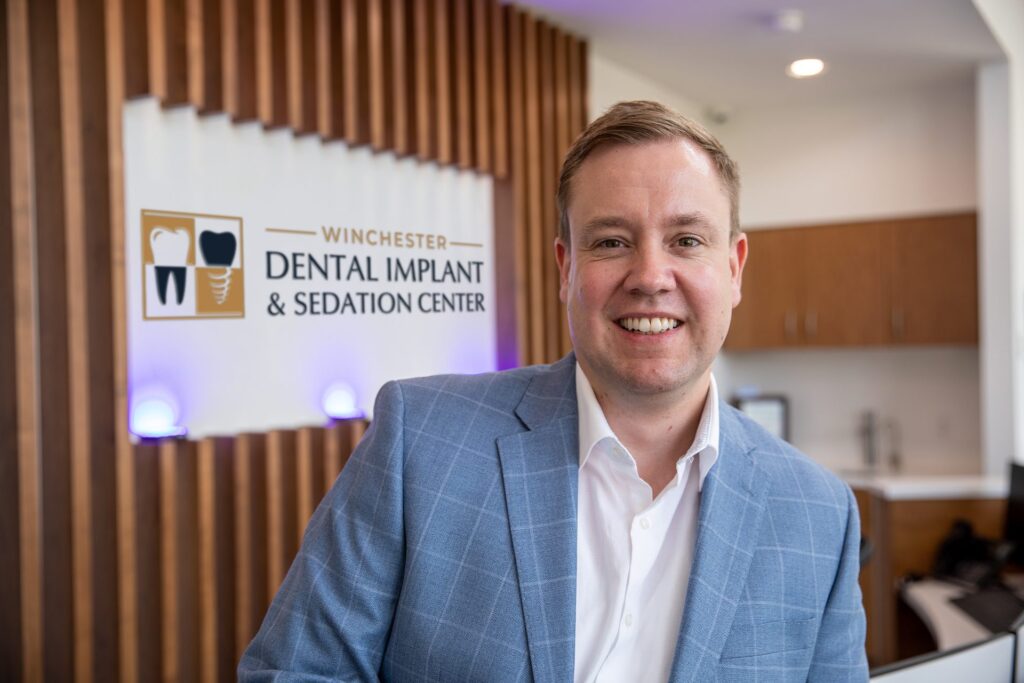
Our answer: Dr. Oestervemb is a Diplomate of the ABOI/ID, earned in 2022 — the only one in Winchester — and board-certified by the American Board of General Dentistry since 2015. He also teaches implant surgery to practicing dentists as faculty on the AAID Mid-Atlantic Implant MaxiCourse. His full credentials are here, listed so you can verify every one of them.
2. “Who places the implant, and who makes the teeth that go on it?”
Why it matters: The most expensive thing in implant dentistry is a handoff. In the common arrangement, a surgeon places the implant and a separate dentist restores it — two offices, two fee schedules, two waiting rooms, and a seam between them where responsibility gets blurry. When your bite needs adjusting a year later, you want one person who can’t point down the hall.
What a strong answer sounds like: one doctor owns both halves of the treatment, or a genuinely single team under one roof. Ask specifically: “If something needs fixing in two years, who do I call, and will there be a second bill?”
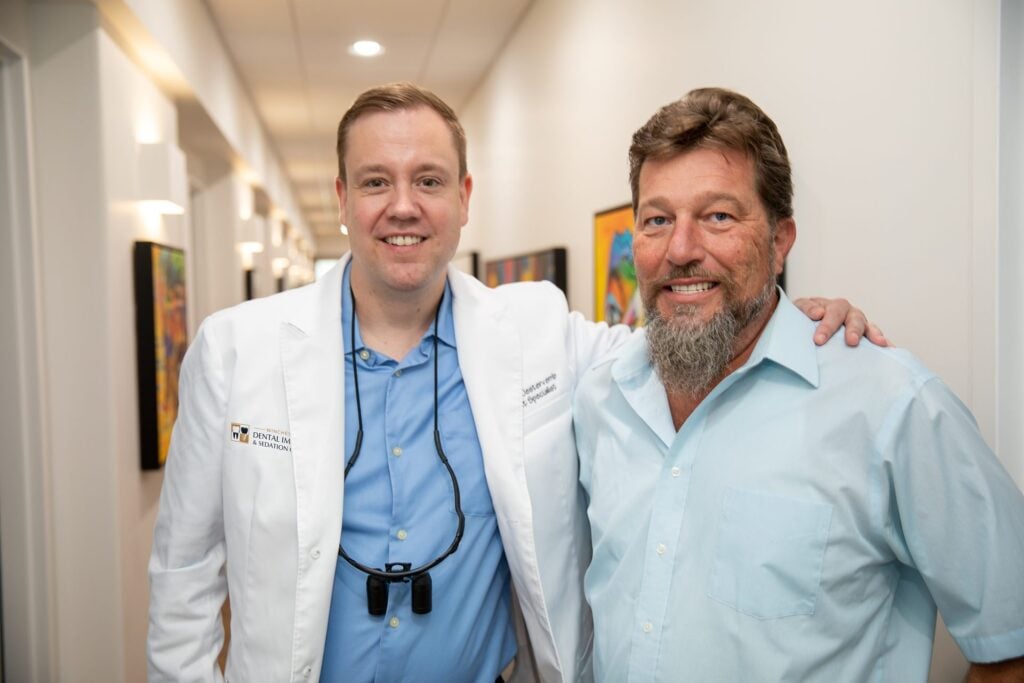
Our answer: the same doctor plans your case, performs the surgery, and delivers your final teeth. One point of contact from consult to follow-up, one bill.
3. “Will my implants be placed with a 3D-printed surgical guide, or freehand?”
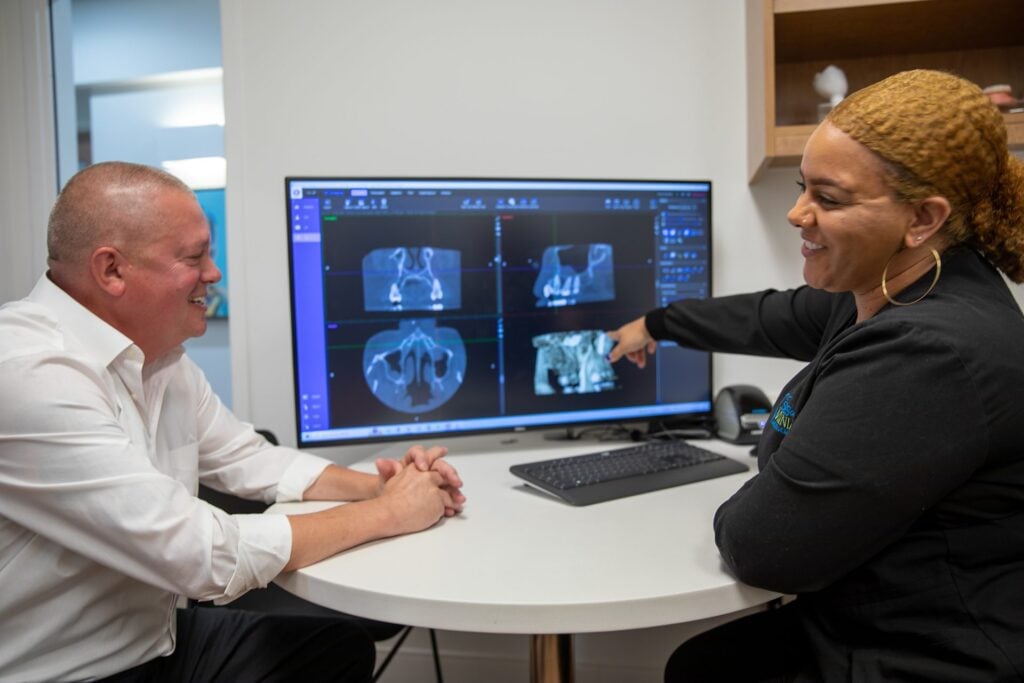
Why it matters: Guided surgery means the entire operation is rehearsed on a computer first. A 3D scan of your jaw is merged with a scan of your gums and teeth, each implant is positioned digitally — angle, depth, distance from nerve and sinus — and a custom guide is printed to transfer that plan into your mouth. The result is smaller incisions or none at all, less swelling, and implants placed where your bone is genuinely strongest. Freehand placement is legal, common, and depends entirely on the surgeon’s eye in the moment.
What a strong answer sounds like: “every case,” not “when it’s complicated.” Most offices don’t do this routinely, and the reason is cost rather than opinion — it requires a cone-beam CT scanner, a 3D printer, guided surgical kits and the training to run all three. Ask the follow-up too: “Is the guide included, or billed as an upgrade?”
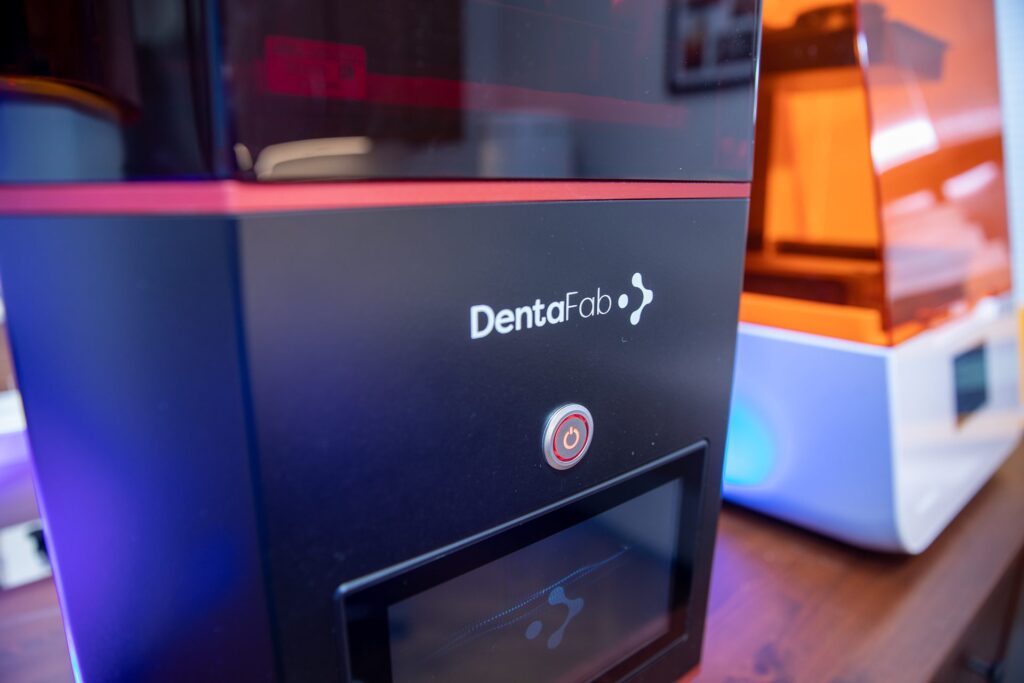
Our answer: every implant placed here is routinely planned in 3D and placed fully guided, and the planning and guide are built into the published price rather than added to it. The equipment behind that is here.
4. “Where is the lab that builds my teeth?”
Why it matters: Distance costs you three things: time, money, and accuracy. A lab three states away means shipping cycles instead of same-day adjustments, an outside markup on your bill, and a shade matched from a photograph rather than against your own face in daylight.
What a strong answer sounds like: a specific place. “We use a lab” is not an answer — ask where, and ask how long a chipped temporary takes to repair.
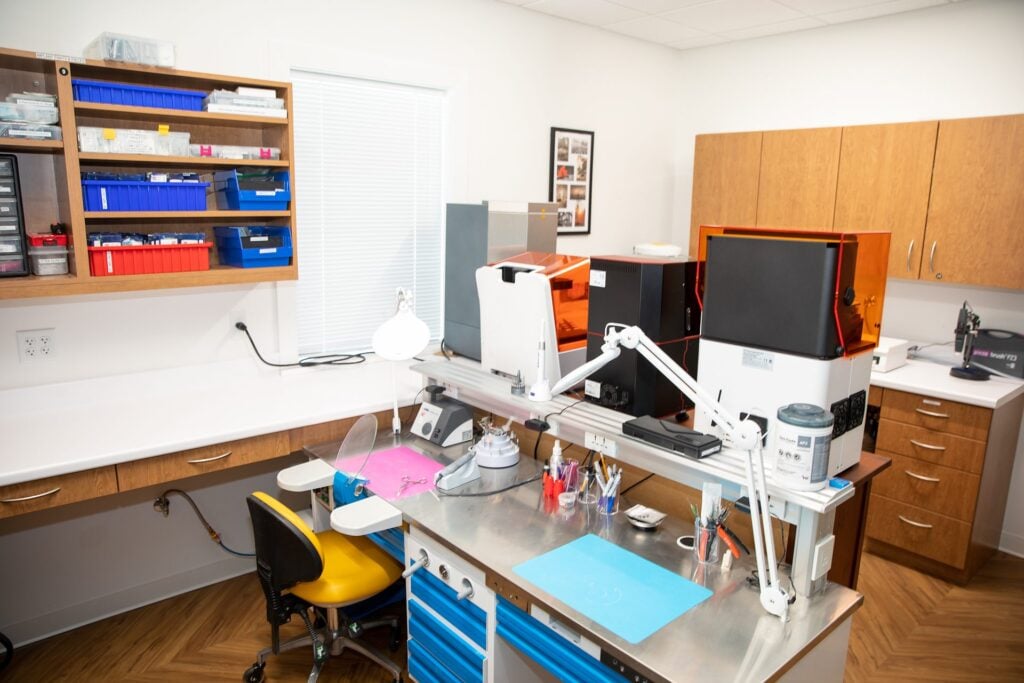
Our answer: in this building, about forty feet from your chair, staffed by two full-time technicians. It’s why same-day teeth are logistically possible here, and why a bite adjustment takes an hour instead of two weeks.
5. “What exactly is in that number — and will you put it in writing?”
Why it matters: This is where quotes stop being comparable. A single implant tooth can be quoted as one price or as six separate ones, and the low number on paper routinely becomes the higher number in real life.
What a strong answer sounds like: a written breakdown that explicitly states whether each of these is included or extra — the 3D scan, the surgical guide, any extraction, any bone graft, the abutment, the temporary tooth, the final crown, sedation, follow-up visits, and adjustments. Ask one more: “What would make this cost more than you’ve quoted, and how likely is that?”
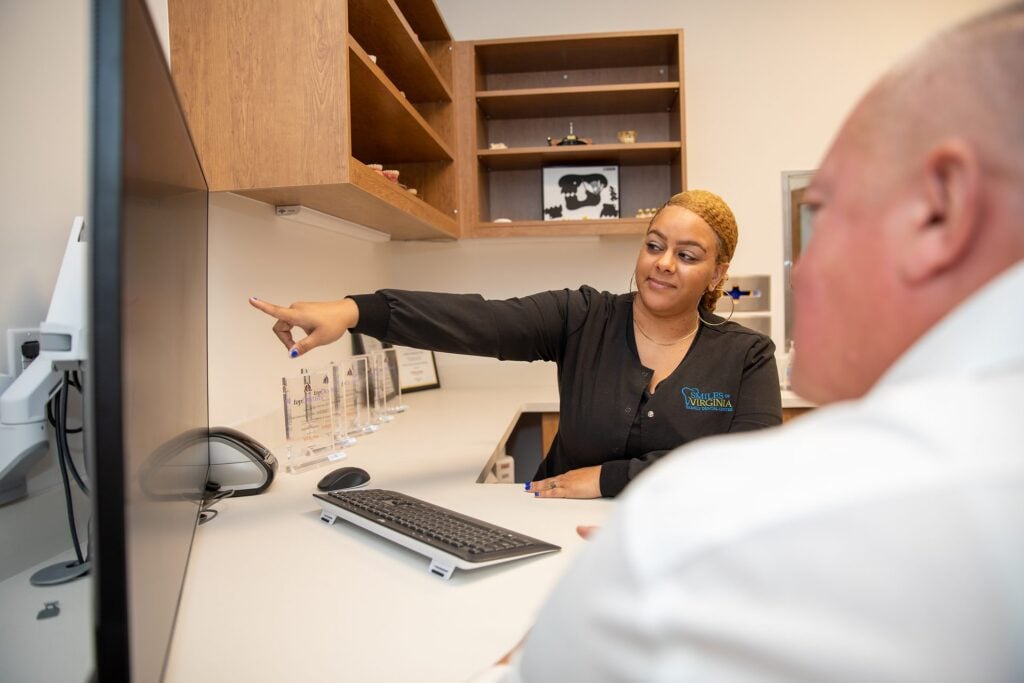
Our answer: our prices are published on this website rather than quoted only behind a desk — you can read them before you call. And you’re welcome to bring a quote from anywhere else to a free second opinion, where we’ll go through it line by line with you. That includes telling you when theirs is the better deal.
6. “What sedation do you actually offer — is it IV, or a pill?”
Why it matters: “Sedation dentistry” is an umbrella covering everything from a tablet you swallow in the waiting room to full general anesthesia. They are not close to equivalent. A swallowed pill cannot be adjusted once it’s down — its effect varies widely between people and there’s no way to add or reduce it as the procedure goes. It also means no IV line, which is the route reversal and emergency medications travel.
What a strong answer sounds like: a clear description of the route, who administers it, and what their certification is. For anything longer or more involved than a single implant — full-arch work, multiple extractions, a sinus lift — this question matters a great deal.
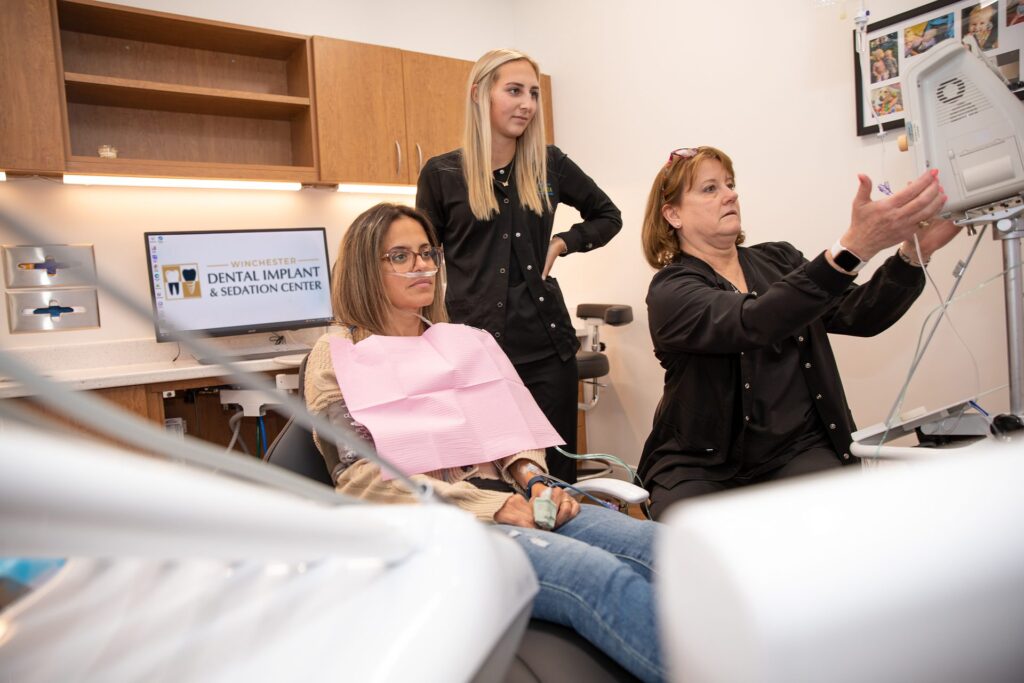
Our answer: IV sedation, certified since 2010, and general anesthesia with a licensed anesthesiologist in our center. We deliberately do not offer oral sedation, and we’d rather explain that choice than quietly market around it — the reasoning is here.
7. “Will you tell me if I don’t need implants?”
Why it matters: This is the hardest question to fake and the most revealing one you can ask. An office where every consultation concludes with implants is telling you something about its business model, not about your mouth.
What a strong answer sounds like: an immediate yes, followed by an example. Ask them to describe the last patient they turned away.
Our answer: a meaningful share of the second opinions we see end with us saving teeth that another office had planned to remove — frequently at a small fraction of the quoted cost. That’s a whole page here, because it happens often enough to need one. “No, you don’t need this” is a complete answer, and you’ll get it if it’s the true one.
8. “What is your standard for bone loss around the implant — and do you measure it?”
Why it matters: This is the question we’d add in 2026, and almost nobody asks it. The profession’s success criteria, unchanged since 1986, accept up to 1.5 mm of bone loss around an implant in the first year and 0.2 mm every year after — so an implant can be a documented “success” while quietly losing the bone that holds it. Bone loss is what becomes gum recession, grey margins, and eventually peri-implantitis. The research now shows most of it is preventable through decisions the dentist makes before and after surgery.
What a strong answer sounds like: a protocol, not a shrug. Listen for gum thickness being measured before surgery, implant depth chosen by design rather than habit, screw-retained teeth with no cement under the gum, and a bone-level X-ray at delivery that gets compared at follow-ups. Then ask the follow-up: “Will you show me the number?”
Our answer: Dr. Oestervemb is a Zero Bone Loss Concepts Ambassador, trained by Prof. Tomas Linkevičius, the researcher who showed that bone loss around implants is a preventable complication. The six-step standard we follow on every implant is published here, in plain English, so you can hold us to it.
Take this list with you
Seven questions. Board certification, who does what, guided or freehand, where the lab is, what’s included, which sedation, and whether they’ll say no. They take about ten minutes to ask and they’ll tell you more than any amount of price comparison.
Ask them at two or three offices, ours included. A practice that welcomes the questions is showing you something. So is a practice that gets uncomfortable.
Where we’re honestly not the right answer
A guide that only pointed at us wouldn’t be a guide. So, plainly:
- If the lowest possible number is your only criterion, you can likely find one lower than ours somewhere — usually by splitting the work between offices, skipping the guide, or using a different grade of components. We’d rather show you the trade-off than pretend it doesn’t exist.
- Some medical histories are better managed in a hospital setting. If yours is one, we’ll say so and help you find the right place.
- Not everyone is a candidate for the treatment they came in asking about. That’s what the consult is for, and it’s why we don’t charge for it.
- Your routine cleanings, fillings and general care are best kept with your own dentist. We’re the implant chapter, not a replacement for the family practice you already like.
What other people concluded
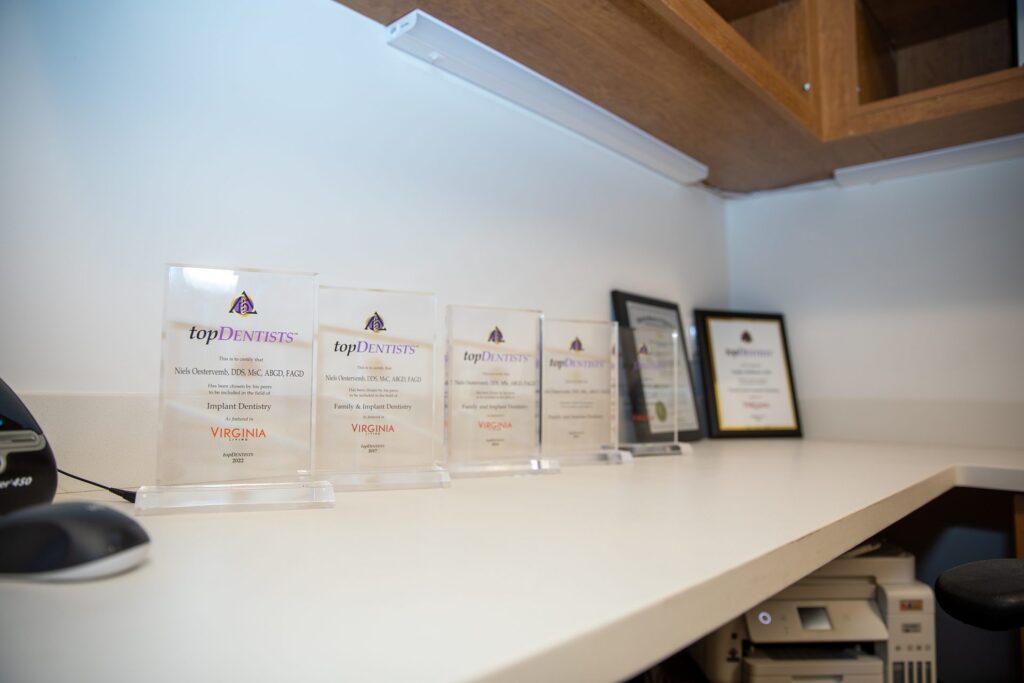
Dr. Oestervemb has been voted a top dentist by his Winchester peers every year from 2015 through 2026 — a vote cast by other dentists, who know exactly what they’re assessing. The practice has been honored as Best Dental Clinic in the Shenandoah Valley by Virginia Living Magazine. Referring dentists in the region send him the implant cases they’d rather not guess on, and full-arch patients drive in from out of state. Patient reviews are here, unedited.
Is a specialist always better than a general dentist for implants?
Not automatically — the credential that matters is documented implant training and examination, not the title on the door. Oral surgeons and periodontists receive excellent surgical training, and many are superb implant surgeons. What a surgical specialty does not necessarily include is the restorative half — designing and delivering the teeth. Ask any provider, whatever their title, the seven questions above.
How many opinions should I get?
At least two for a single implant, and we’d suggest three for full-arch treatment — it’s a decision you’ll live with for decades. Second opinions here are free and include a 3D scan, and you’re welcome to take the findings elsewhere.
What should I bring to a consultation?
Any quote or treatment plan you’ve already been given, a list of your medications, and the questions above. If another office took X-rays or a scan recently, bring those too — there’s no reason to repeat imaging unnecessarily.
Does asking these questions offend a dentist?
It shouldn’t, and the reaction is information. You’re making a significant decision about your own body and your own money. Any provider worth choosing will be glad you came prepared.