

What Does IV Sedation at the Dentist Feel Like? A Step-by-Step Patient Walkthrough
Medically reviewed by Dr. Niels Oestervemb, DDS — Diplomate, American Board of Oral Implantology/Implant Dentistry; providing IV sedation since 2010.
For a lot of people, the barrier to fixing their teeth was never the dentistry — it was the being-awake-for-it part. If you’ve been putting off implant surgery, extractions, or years of accumulated work because of fear, IV sedation is usually the thing that finally makes it possible. Here’s an honest, step-by-step account of what it’s actually like.
Before your appointment
You’ll get simple instructions: typically no food for several hours beforehand, guidance on which of your regular medications to take, comfortable clothes with sleeves that roll up, and — non-negotiable — a trusted adult to drive you home. We review your health history and current medications in advance, because safe sedation is mostly planned before anyone reaches for an IV.
Step by step: the appointment itself
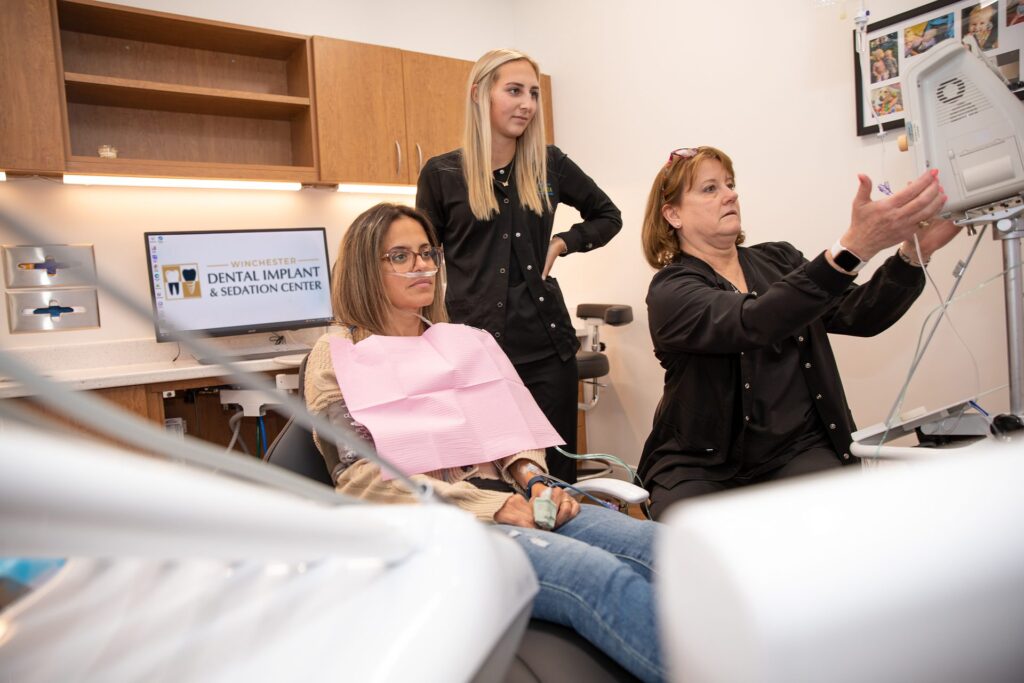
- Getting settled. You’re seated, monitors go on — blood pressure cuff, pulse oximeter on your finger, and breathing monitoring. These stay on the entire visit, watched continuously by a trained team.
- The IV. A small line in your hand or arm — a quick pinch, and for most people the worst moment of the whole day. Nervous about needles? Nitrous oxide first is an option.
- Drifting. Sedation medication flows through the line and works within minutes. Most patients describe a warm, heavy calm — like the moment before falling asleep. You’re technically responsive, but profoundly relaxed.
- The part you won’t remember. The medications used for IV sedation commonly cause temporary amnesia for the procedure. Patients routinely ask when we’re going to start — after we’ve finished. A two-hour surgery feels like ten minutes.
- Waking up. The medication is reduced, you become more alert in recovery, and you go home groggy but comfortable, with the day’s work done.
IV sedation vs. the other options
- Nitrous oxide: Light relaxation, wears off in minutes, you drive yourself home. Great for mild nerves.
- Oral sedation: A pill beforehand — deeper than nitrous, but slower to adjust and less predictable person-to-person.
- IV sedation: Deep, adjustable in real time, with amnesia for the procedure. The workhorse for implant surgery and dental fear.
- Fully asleep: For patients who want or need it, general anesthesia with a dedicated anesthesia provider is available in-office — see our fear-free dentistry page for the full spectrum.
Is it safe?
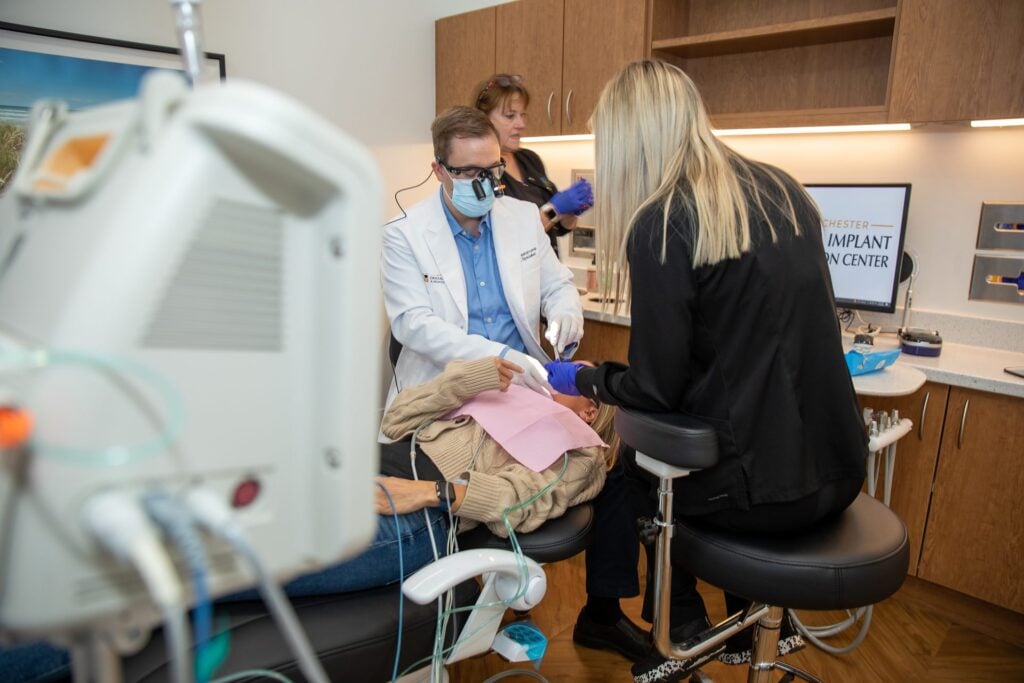
In appropriately screened patients, with proper monitoring and a credentialed provider, IV sedation has an excellent safety record. The variables that matter are the ones you should ask any office about: Who administers it? What’s their training and how long have they done it? What monitoring is used? Who is watching it throughout? Our answers: Dr. Oestervemb has provided IV sedation since 2010, with continuous monitoring for every case and screening that starts before you’re ever scheduled. Some medical conditions call for extra precautions or a different setting — that’s exactly what the pre-sedation review is for.
Who benefits most
- Patients with dental fear or a bad past experience
- Strong gag reflexes, difficulty getting numb, or TMJ pain with long appointments
- Anyone consolidating years of work — or implant surgery — into one or two visits
Frequently asked questions
Will I say anything embarrassing?
Almost certainly not. This isn’t the wisdom-teeth-video kind of loopy; most patients are quietly relaxed and remember nothing.
How long until I feel normal?
Plan on taking the rest of the day off, with an escort home. Most people feel themselves by the next morning.
What does it cost?
IV sedation is typically billed by time; nationally it often runs several hundred dollars for the first hour. It’s itemized in your written plan, and our monthly payment options can include it.
If fear has been the reason you’ve waited, you don’t have to white-knuckle your way through treatment — schedule a consultation and we’ll plan the dentistry and the comfort level together.
This article is general education, not medical advice; sedation candidacy is determined by your health history and exam.


