
Told You Don’t Have Enough Bone for Dental Implants? Here’s What That Actually Means
Medically reviewed by Dr. Niels Oestervemb, DDS — Diplomate, American Board of Oral Implantology/Implant Dentistry. Dr. Oestervemb teaches bone grafting and implant techniques to other dentists.
Every month we meet patients who were told — sometimes years ago — that they “don’t have enough bone for implants.” Many of them stopped looking after that sentence. Here’s the part that often goes unsaid: insufficient bone is usually a treatable condition, not a permanent disqualification. Modern grafting rebuilds bone predictably, and advanced techniques can work with anatomy that older methods couldn’t.
Why jawbone disappears in the first place
Bone is living tissue that stays dense because tooth roots stimulate it every time you chew. Remove the tooth and the stimulation stops — and the body starts reclaiming that bone. The ridge where a tooth once stood can lose a large share of its width within the first year after an extraction, and it keeps slowly shrinking after that. Long-term denture wear accelerates the process, because dentures press on the ridge without stimulating it.
This is why “I’ll get the implant later” quietly becomes a bigger procedure than “I’ll get it now,” and why we graft many extraction sockets on the day of removal — preserving bone is far easier than rebuilding it.
The rebuilding toolbox
Which technique you’d need depends on where the bone is missing and how much:
- Socket preservation. Graft material placed in the socket at extraction, protecting the site for a future implant. The simplest and least expensive graft — typically a few hundred dollars.
- Ridge augmentation. Rebuilding width or height on a ridge that has already shrunk, using graft material secured under a protective membrane. Healing usually runs 3–6 months before implant placement.
- Sinus lift. In the upper back jaw, the sinus sits close to where implants go. A sinus lift gently raises the sinus membrane and adds bone beneath it. Depending on the approach, this can be modest or substantial — typically in the $1,500–$5,000 range nationally — and it’s one of the most common reasons patients were told “no” elsewhere.
- Graft materials. Options include your own bone, donor bone, mineral-based materials, and synthetic substitutes — often in combination. Each has a role; the choice is a clinical decision we’ll explain in plain English at your visit.
When implants can work without major grafting
Sometimes the smarter route isn’t adding bone — it’s using the bone you have more intelligently. Angled implant placement (the principle behind All-on-4 full-arch treatment) anchors into the denser front jaw and can avoid sinus grafting entirely for full-arch cases. Narrow-ridge protocols and careful 3D planning rescue many single-tooth sites, too. The point: “not enough bone” is the start of treatment planning, not the verdict.
Does grafting hurt, and how long does it add?
Most patients describe graft recovery as a few days of manageable soreness — comparable to the extraction itself — controlled with over-the-counter medication in the majority of cases. Sedation up to fully asleep is available for the anxious. Timeline-wise, smaller grafts often heal alongside the implant (no added months), while larger rebuilds typically need 3–6 months (sinus grafts sometimes longer) before the implant is placed. Slower, yes. But an implant in solid bone is the difference between decades of service and an early failure.
Why the answer changes between offices
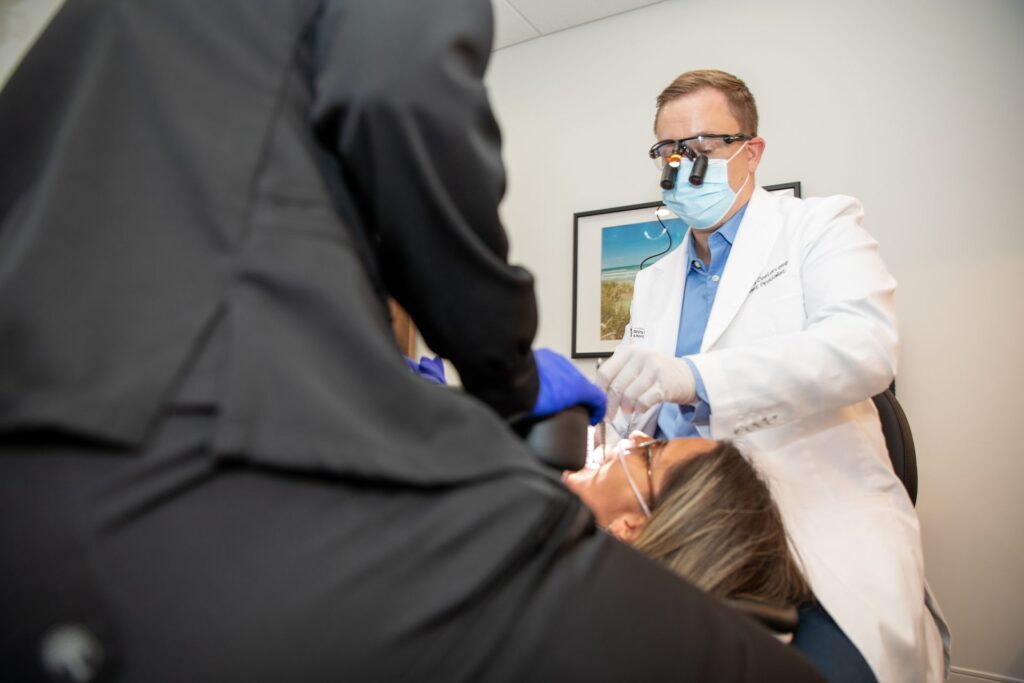
Grafting outcomes are technique-sensitive, so offices reasonably say “no” to procedures they don’t perform often. That’s exactly why second opinions matter in implant dentistry. Dr. Oestervemb holds board certification from the American Board of Oral Implantology/Implant Dentistry and teaches grafting techniques to other dentists — the cases that get referred out elsewhere are the cases we do routinely, under one roof.
Frequently asked questions
How do you know how much bone I have?
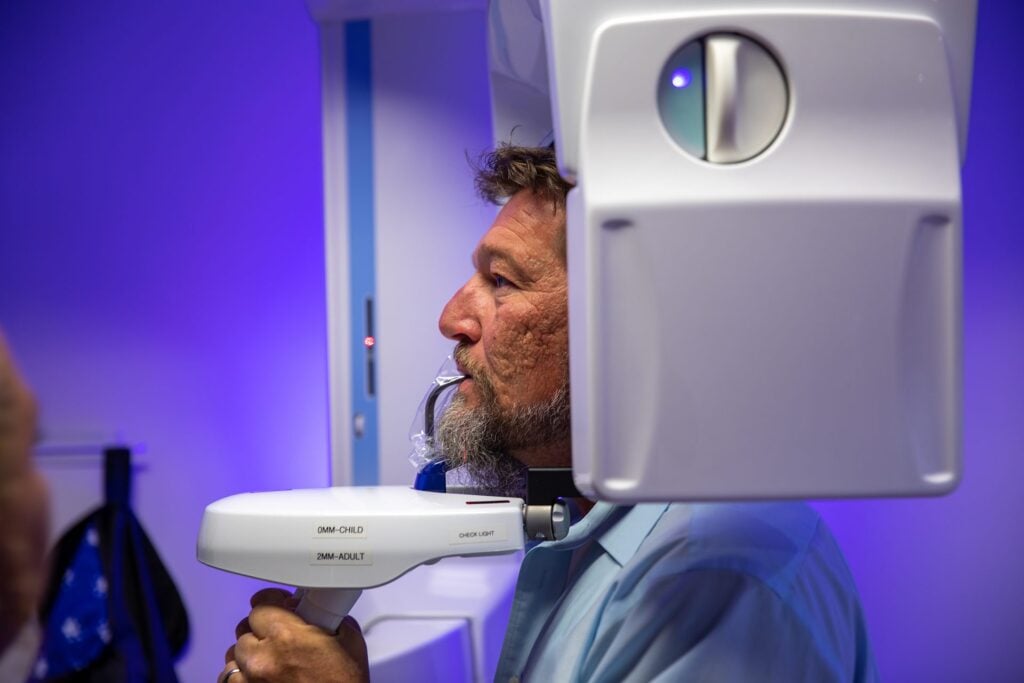
A CBCT (3D) scan measures your bone in millimeters — no guessing from a flat X-ray. It’s included in our implant consultation.
I was told no ten years ago. Is it worth asking again?
Yes. Techniques and materials have advanced significantly, and a scan today reflects today’s anatomy and today’s options.
Will insurance help with grafting?
Sometimes, particularly when tied to extractions. We verify benefits and offer financing so the plan fits your budget, not the other way around.
Costs and healing times above are typical U.S. figures for general education; your written plan follows your exam and 3D scan.


