

Dental Implant vs. Bridge: The 20-Year Cost Comparison Nobody Shows You
Medically reviewed by Dr. Niels Oestervemb, DDS — Diplomate, American Board of Oral Implantology/Implant Dentistry
When you lose a single tooth, you’ll usually be offered two real fixes: a bridge or an implant. Ask “which is cheaper?” and you’ll get two different honest answers — because it depends entirely on the time horizon. Today, the bridge often wins. Over twenty years, the implant usually does. Here’s the math, plus the biology behind it.
What each one actually is
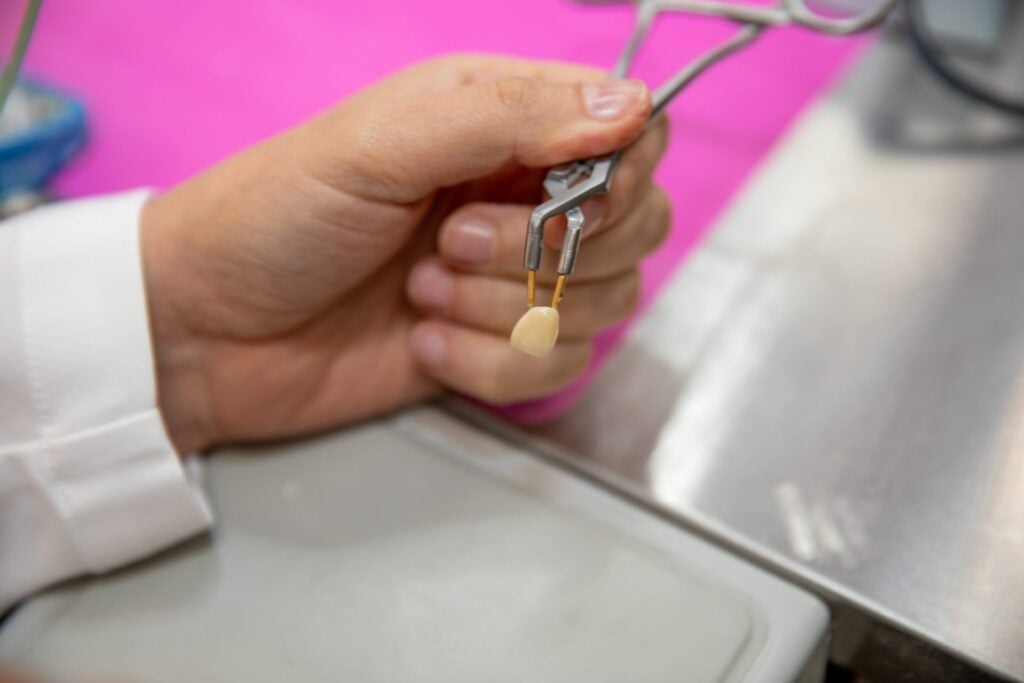
A bridge replaces the missing tooth with a false tooth anchored to crowns on the neighboring teeth. To do that, those neighbors are shaved down — permanently — even if they’re perfectly healthy. A dental implant replaces the tooth independently: a titanium post in the bone, an abutment, and a crown, with the neighbors untouched.
Upfront cost: bridge wins
- Three-unit bridge: typically $2,500–$6,500 nationally
- Single implant (post + abutment + crown): typically $3,500–$6,800 nationally
Insurance also tends to be friendlier to bridges. If the next 3–5 years are the whole picture, the bridge is the budget option. But teeth are a long game.
The 20-year picture: implant usually wins
Bridges are consumables. Their typical service life runs roughly 7–15 years; the usual failure points are decay creeping under the anchor crowns (floss must be threaded under a bridge — most people don’t) and stress on the anchor teeth, which sometimes go on to need root canals. Replace a mid-range bridge once or twice over 20 years and the arithmetic looks like this:
- Bridge path: $4,000 today + $4,500 replacement in year 12 (+ possible root canal and crown on an anchor tooth, $2,000+) ≈ $8,500–$10,500+
- Implant path: $5,500 today + perhaps one crown replacement in the distant future ≈ $5,500–$7,500
Illustrative numbers, not a quote — but the shape of the comparison holds in study after study of restoration longevity: implants have the highest long-term survival rates of any tooth replacement, with many lasting decades.
The part cost tables can’t capture: bone and neighbors
Two biological differences do the quiet work here:
- Your neighboring teeth. A bridge spends two healthy teeth to replace one. An implant spends none. In your 40s that trade feels abstract; in your 70s, those two anchor teeth are often the story of your dental chart.
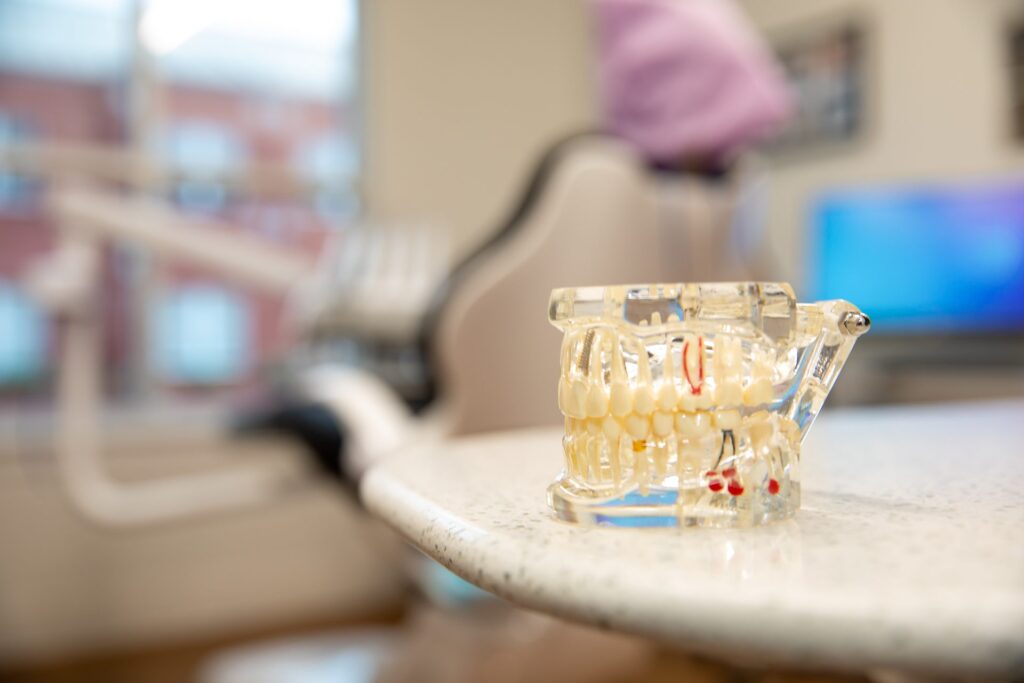
- Your bone. Nothing stimulates the jawbone under a bridge’s false tooth, so the ridge slowly shrinks beneath it — sometimes creating a visible gap or food trap over the years. An implant functions like a root and preserves the bone around it. (Waited a long time already? You may need grafting first — bone loss is also why we advise against waiting years to decide.)
When a bridge is still the right call
Honesty cuts both ways. A bridge — or an implant-supported bridge — can be the better plan when the neighboring teeth already need crowns anyway, when medical factors make surgery unwise, or when timeline and budget genuinely rule the day. And when several teeth in a row are missing, an implant bridge often replaces them with fewer implants than teeth — a middle path many patients don’t know exists.
Frequently asked questions
Which one looks more natural?
Both can look excellent. Over many years, the implant tends to age better cosmetically because it preserves the bone and gum contour beneath the tooth.
How long does each take?
A bridge: usually two visits over a few weeks. An implant: typically a few months start to finish while the bone integrates — though in the right conditions, same-day options shorten the toothless window dramatically.
I’ve been quoted both. How do I decide?
Bring us the quotes. A 3D scan, an honest look at the neighboring teeth, and ten minutes of arithmetic usually make the answer obvious — schedule here.
All figures are typical U.S. ranges for education, not a quote; your numbers follow an exam.


